



















































Integrity Is Not a Value Statement: How Business Ethics Can Unlock Nigeria's Economic Potential in 2026
Nigeria's greatest economic challenge is not a lack of resources but a deficit of integrity. Discover how business ethics, corporate governance, institutional trust, and accountability can drive investment, economic growth, and national prosperity.


By Femi Coker


Business Ethics and Economic Growth in Nigeria
There is a profoundly unsettling paradox at the heart of Nigeria's economic story. Here is a country endowed with Africa's largest oil reserves, over 220 million people — the continent's most dynamic human capital base — more than 70 million hectares of fertile agricultural land, abundant solid minerals, and a creative economy that commands global admiration. Nollywood generates billions. Afrobeats fills arenas from London to Los Angeles. Nigerian tech talent powers startups across three continents. And yet, by almost every measurable index of human development, institutional effectiveness, and economic equity, Nigeria continues to significantly underperform its extraordinary potential.
This is not a coincidence. It is a consequence.
The central argument of this piece is straightforward, though its implications are far-reaching: integrity is not a value statement. It is a business strategy. When corporations, institutions, and governments operate with integrity — when promises are kept, accounts are accurate, contracts are honoured, and public resources are deployed transparently for public benefit — economies grow, investors arrive, citizens thrive, and nations ascend. When they do not, the inverse is equally and devastatingly true.
The question for Nigeria in 2026 is not whether this country has the resources to transform. It clearly does. The question is whether Nigeria has the institutional will to transform integrity from a boardroom platitude into a national economic instrument.
Why Integrity Is a Business Strategy, Not a Value Statement
Walk into any major Nigerian corporate office and you will find the word "integrity" — on plaques, in mission statements, in the chairman's address at annual general meetings. It is invoked with enthusiasm and, too often, practised with remarkable inconsistency. This gap between the articulation of integrity and its institutional embodiment is, at the systemic level, economically catastrophic.
The classical definition of integrity, rooted in the Latin integritas, denotes wholeness and uncorrupted condition. In business terms, integrity means the consistent alignment between stated values and actual behaviour — in transactions, in governance, in financial reporting, and in the exercise of institutional power. It is, at its core, a form of institutional reliability.
What the empirical evidence overwhelmingly supports is that this reliability is not merely morally desirable — it is economically productive. As Nobel laureate Kenneth Arrow argued, virtually every commercial transaction has within itself an element of trust, and the erosion of that trust imposes measurable costs on economic activity. In short, integrity functions as social and economic infrastructure — as essential to a nation's productive capacity as roads, electricity, and broadband.
Integrity functions as social and economic infrastructure — as essential to a nation's productive capacity as roads, electricity, and broadband.
The Hidden Cost of Corruption on National Development
The economic cost of corruption and ethical failure in Nigeria is not abstract. It is measurable, and the numbers are staggering.
According to analysis by PricewaterhouseCoopers corroborated by IMF World Economic Outlook data, Nigeria's GDP could be USD $327 billion higher by 2030 if the country were to reduce its corruption levels to those of Ghana — not Denmark, not Singapore, but Ghana, a comparable regional economy. This single statistic encapsulates the scale of value being destroyed. Nigeria is not merely losing money to corruption; it is forfeiting an entire alternate economic future.
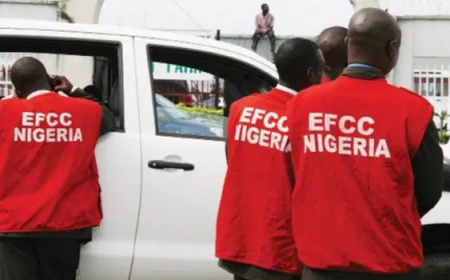
The Economic and Financial Crimes Commission (EFCC) has itself estimated that more than USD $380 billion has been lost to corruption in Nigeria since independence in 1960. To contextualise this figure: Nigeria's entire GDP in 2024 stood at approximately $362 billion. The nation has, in effect, lost more money to corruption than its entire current annual economic output.
Meanwhile, Foreign Direct Investment — the lifeblood of emerging economies — has haemorrhaged as a direct consequence. The World Bank confirmed in 2025 that Nigeria attracted FDI worth less than one per cent of GDP in 2024, with Q2 2024 recording the lowest FDI level in over a decade. Investors do not merely seek markets; they seek predictability, rule of law, and the confidence that contracts will be honoured.
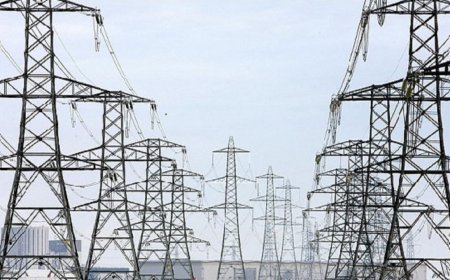
The sectoral damage goes further. Nigeria's public procurement expenditure — representing between 10–25% of GDP annually — is significantly compromised by inflated contracts and kickback arrangements, resulting in infrastructure projects routinely costing three to four times their genuine value with inferior outcomes. The fuel subsidy regime alone cost an estimated ₦4.7 trillion in 2022. The national electricity grid, serving a population of over 220 million from a foundation of fewer than 4,000 megawatts, is not a technical failure. It is an ethical one.
Perhaps most damaging of all is what the World Bank's 2024 education data reveals: Nigeria's learning poverty rate exceeds 70%, while its doctor-to-patient ratio of approximately 1:6,000 is ten times worse than the WHO-recommended standard. These are not resource deficits. They are deficits manufactured by the systematic theft of opportunity.
MORE READ:
- The Cost of Distrust: How Nigeria's Credit Culture Is Killing SME Growth and Economic Development
- 5 Corporate Governance Failures That Cost African Companies Billions - And How to Avoid Them
- Why Africa’s Richest Nations Have Weak Currencies - What Nigeria Must Do Before 2027
- Nigeria - DRC Private Sector Partnership: A New Path for African Industrialisation and Economic Sovereignty
Institutional Trust as Economic Infrastructure
Acemoglu and Robinson's landmark work, Why Nations Fail, provides perhaps the most compelling empirical demonstration: nations with inclusive, accountable institutions consistently outperform those with extractive, corrupt ones — regardless of their natural resource endowments. Nigeria is, tragically, one of their most illustrative case studies.
The concept that matters here is institutional trust — the degree to which citizens, businesses, and investors believe that the rules will be applied consistently and fairly. High-trust economies like Denmark and New Zealand generate what economists call social capital: the invisible lubricant of economic activity. In these environments, a contract signed is a contract honoured. A tender awarded is a tender deserved.
Nigeria, by contrast, operates in what institutional economists describe as a low-trust equilibrium — a state in which the rational response to an untrustworthy environment is defensive, short-term, extractive behaviour that, in aggregate, reproduces the very untrustworthiness it is responding to. Breaking this equilibrium is the central developmental challenge Nigeria faces, and business ethics is the primary instrument for doing so.
Corporate Governance and Business Performance
The link between strong corporate governance and superior business performance is no longer a theoretical proposition — it is empirically documented across markets. Companies that operate with transparent financial reporting, independent board oversight, robust internal controls, and consistent ethical standards consistently attract better capital, manage risk more effectively, and deliver superior long-term returns to shareholders.
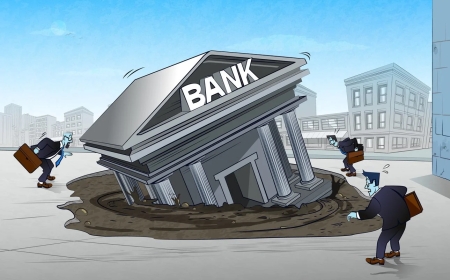
In the Nigerian context, the collapse of several financial institutions in the early 2000s and subsequent recapitalisation crises were not technical failures — they were crises of ethical failure. Falsified balance sheets, insider lending, regulatory capture, and the systematic abuse of depositor funds destroyed public confidence in the financial system in ways that continue to suppress domestic savings rates and constrain capital markets.
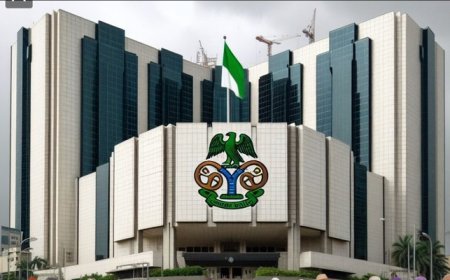
The Central Bank of Nigeria's ongoing financial sector reforms, including strengthened corporate governance codes for financial institutions, reflect a growing recognition that governance standards are not merely compliance obligations — they are competitive infrastructure. A Nigerian company that can credibly demonstrate transparent governance to an international investor has a material competitive advantage over one that cannot.
Foreign Direct Investment and Ethical Business Environments
International investors make location decisions based on a relatively short list of critical variables: political stability, rule of law, contract enforceability, regulatory predictability, and perceived corruption risk. Nigeria currently struggles on nearly all of these dimensions.
Nigeria ranks 142nd out of 182 countries on Transparency International's 2025 Corruption Perceptions Index with a score of just 26 out of 100 — well below the global average of 43. The country also ranks 127th out of 184 on the Index of Economic Freedom.
The link between corruption perceptions and FDI flows is not speculative — it is statistically robust. Every point improvement on the Corruption Perceptions Index correlates with measurable improvements in investment inflows. Countries that have improved their governance scores over sustained periods — Rwanda, Georgia, Estonia — have attracted FDI volumes disproportionate to their market size. Nigeria has the market size. What it currently lacks is the governance credibility to match.
Lessons from Singapore, Denmark, and South Korea
If Nigeria represents the cost of ethical deficit, the world's leading economies represent the dividend of ethical investment. Three case studies are particularly instructive.
Singapore: The Most Illuminating Comparison
In 1965, Singapore was a resource-poor island of 581 square kilometres, expelled from Malaysia and widely regarded as non-viable as an independent state. Today, Singapore's GDP per capita exceeds $97,000 in nominal terms, placing it among the wealthiest nations on earth, and its Corruption Perceptions Index score stands at 84 out of 100. It ranks 2nd globally for ease of doing business.
Prime Minister Lee Kuan Yew treated anti-corruption not as a moral campaign but as an economic one. The Prevention of Corruption Act was enforced without exception. Civil service salaries were benchmarked to private sector rates to eliminate the economic incentive for bribery. Regulatory processes were streamlined and digitised to eliminate the discretionary human contact points where corruption typically flourishes. Integrity was treated as infrastructure, and it delivered infrastructure-level returns.
Denmark: Integrity as Social Capital
Denmark consistently tops the global Corruption Perceptions Index — globally, the top positions are occupied by countries with the strongest institutional frameworks. Denmark's GDP per capita exceeds USD $68,000, and its Gini coefficient is among the lowest in the world — demonstrating that prosperity built on integrity tends to be broadly shared rather than concentrated among elites.
The Danish model demonstrates that the relationship between integrity and development is not merely economic — it is social. High trust generates high efficiency across every dimension of economic life: faster contracting, lower compliance costs, greater innovation, deeper investment.
South Korea: Institutional Responsiveness
South Korea transformed from a per capita income lower than Nigeria's in the 1950s to a $1.87 trillion economy and a global leader in technology, automotive, and shipbuilding. What is particularly instructive is that this transformation occurred despite significant governance scandals — former presidents were prosecuted, major conglomerate executives faced justice. Critically, Korea's institutions responded. Courts functioned. Accountability mechanisms were activated.
The lesson for Nigeria is not the absence of ethical failure in these success stories. It is the institutional capacity to self-correct when failure occurs — and the signal this sends to the business community that no one is above the rules.
Country Comparison: Integrity, Investment, and Economic Outcomes
The table below illustrates how corruption perceptions correlate with key economic indicators across a selection of countries relevant to Nigeria's strategic context.
|
Country |
CPI Score (2025) |
GDP per Capita (USD) |
FDI as % of GDP |
Ease of Doing Business Rank |
|
|
Denmark |
89 |
~$68,000 |
5–8% |
Top 5 |
|
|
Singapore |
84 |
~$97,000 |
20%+ |
2nd |
|
|
South Korea |
63 |
~$35,000 |
1–2% |
5th |
|
|
Ghana |
43 |
~$2,400 |
2–4% |
Mid-tier |
|
|
Rwanda |
53 |
~$950 |
3–5% |
Top 40 (Africa) |
|
|
Nigeria |
26 |
~$1,650 |
<1% |
100s |
|
Sources: Transparency International CPI 2025; World Bank; IMF World Economic Outlook 2025
Public Sector Accountability and Economic Prosperity
Public sector accountability is not a governance technicality. It is an economic multiplier. When public funds reach their intended destinations — when schools are actually built, roads actually paved, hospitals actually equipped — the returns compound across generations through human capital, productivity, and social stability.
The EFCC's asset recovery efforts have shown meaningful progress, with over ₦566 billion, $411 million, and 1,502 properties recovered between October 2023 and September 2025. These recoveries matter, but they are symptom management. The structural intervention required is the prevention architecture: procurement transparency, open contracting frameworks, independent audit institutions with genuine enforcement powers, and a judicial system that processes corruption cases in months rather than decades.
Countries that have transformed their public sectors share a common thread: they made accountability automatic, not exceptional. Estonia digitised its entire public administration, eliminating the human discretion points where corruption thrives. Rwanda deployed real-time procurement monitoring. Singapore made civil service integrity a condition of career advancement, not merely a legal obligation. Nigeria has the institutional blueprints. The missing ingredient is the political will to enforce them consistently.
MORE NEWS:
- Lagos International Financial Centre: Nigeria’s New Economic Blueprint
- How Corporate Governance Drives the Survival and Growth of Emerging Enterprises
- Why Strong Corporate Governance Is the Secret to African Business Survival
- Digital Governance in Nigeria, Why Corporate Boards Must Treat AI, Cybersecurity and Data Ethics as Fiduciary Duties
Building an Integrity-Driven Business Culture in Nigeria
Transformation at the national level begins at the firm level. Nigerian businesses cannot wait for government to create an ethical environment before adopting ethical practices — they must lead. And there is a compelling commercial case for doing so.
An integrity-driven business culture means several concrete things in practice:
• Transparent financial reporting — not just regulatory compliance, but genuine transparency that builds investor and lender confidence. Nigerian SMEs that can present clean, audited accounts to development finance institutions unlock capital that their opaque competitors cannot access.
• Ethical supply chain practices — honouring payment terms with suppliers, refusing to participate in procurement fraud, competing on genuine value rather than relationship capital. Businesses that build reputations for this practice attract better partners, better talent, and better clients over time.
• Whistleblowing and accountability mechanisms — internal cultures where ethical violations can be safely reported and consistently addressed. The Securities and Exchange Commission's whistleblower framework provides a regulatory foundation; building the internal culture to support it is the leadership challenge.
• Ethical leadership development — investing in managers who understand that the short-term cost of refusing a corrupt arrangement is almost always lower than the long-term cost of participating in one. This is not naivety. It is strategy.
A Framework for Nigeria's Inclusive Economic Transformation
Translating integrity from aspiration to economic strategy requires action across four levels simultaneously:
1. Institutional Architecture — Strengthening and fully resourcing anti-corruption agencies with operational independence from political cycles. The EFCC, ICPC, and Code of Conduct Bureau must function as genuine deterrence mechanisms, not selective political instruments. Asset declaration requirements must be enforced, not merely filed.
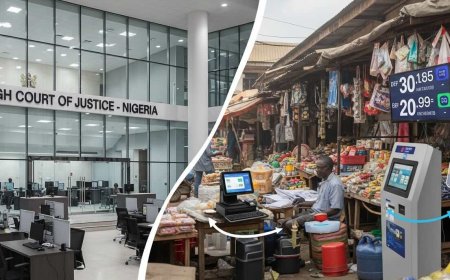
2. Business Environment Reform — Continued digitisation of regulatory processes to reduce discretionary human interfaces. The CAC's digital registration reforms have reduced business registration time dramatically — this model must be extended to licensing, permits, tax compliance, and procurement.
3. Corporate Governance Standards — Mandatory, independently audited governance reporting for all listed companies and medium-to-large private enterprises. The Financial Reporting Council of Nigeria's governance codes must be enforced with material consequences for non-compliance.
4. Cultural and Educational Investment — Business ethics must be embedded in MBA curricula, professional certification programmes, and boardroom development. The Nigerian business community needs leaders who understand integrity not as a personal virtue but as a strategic economic tool.
The transformation Nigeria requires is not a question of resources. It is a question of institutional will, strategic intentionality, and the collective recognition — in boardrooms, in government offices, in classrooms — that integrity is the most powerful competitive advantage this country has yet to deploy at scale.
Conclusion
Nigeria stands at a defining inflection point. The external economic environment is challenging. But the internal constraint — the ethical deficit that has cost this country a quantifiable fortune in investment, in development, and in human potential — is one that Nigerians can choose to address.
The countries that made that choice — Singapore, Denmark, South Korea, Rwanda — did not become less corrupt by accident. They made integrity a strategic priority, resourced and enforced it consistently, and reaped economic dividends that far exceeded any short-term cost of the transition.
The $327 billion in additional GDP that awaits Nigeria is not a projection. It is an indictment of what has been lost — and a roadmap of what can be reclaimed.
The transformation from a resource-rich, governance-poor developing nation to a competitive, inclusive economy is not beyond Nigeria's capability. It is squarely within Nigeria's choice.
And that choice begins with the understanding that integrity is not a value inscribed on a plaque. It is the most powerful business strategy Africa's largest economy has yet to fully embrace.
About Avanoo Capital Limited
Avanoo Capital Limited is a money lending, financial advisory, and strategic investment firm focused on creating sustainable value across Africa's emerging markets. The company specializes in investment facilitation, project financing, alternative financing, energy banking, and capital-raising solutions for governments, corporations, SMEs, and high-growth enterprises across Africa.
Leveraging deep market expertise, strategic partnerships, and a results-driven approach, Avanoo Capital helps clients unlock opportunities, optimize assets, mitigate risks, and achieve long-term growth. Committed to innovation, integrity, and economic transformation, Avanoo Capital Limited serves as a trusted advisory partner for investors and organizations seeking to drive impactful investments and sustainable business development across Africa. WhatsApp Only: +234 902 505 0410
References & Further Reading
- • Transparency International — CPI 2025
- • World Bank — Nigeria Country Overview
- • PwC Nigeria Economic Analysis
- • EFCC Annual Report
- • IMF World Economic Outlook
- • Acemoglu & Robinson — Why Nations Fail
- • Financial Reporting Council of Nigeria
- • Securities and Exchange Commission Nigeria
- • IFC — Corporate Governance
- • Journal of Business Ethics (Springer)
What's Your Reaction?