


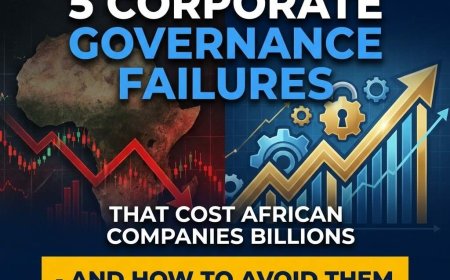




































































5 Corporate Governance Failures That Cost African Companies Billions - And How to Avoid Them
Discover the 5 corporate governance failures costing African companies billions in losses, fraud, regulatory penalties, and business collapse—and learn practical strategies to avoid them.

A Probitas Report Special Intelligence Brief


EXECUTIVE SUMMARY
Corporate governance failure is not a theoretical risk in Africa, it is a costly reality. From collapsed banks to embezzled pensions, from family business implosions to regulatory disasters, the price of poor governance across African markets runs into billions of dollars annually.
This report examines five real-world categories of governance failure that have devastated African companies, extracts the lessons, and provides the Probitas Framework - a practical governance excellence model you can implement immediately.
Who Should Read This:
- Board directors and executives
- Family business successors
- Compliance officers and risk managers
- Investors evaluating African opportunities
- Regulators and policy makers
INTRODUCTION: The True Cost of Governance Failure in Africa
According to the World Bank, corporate governance failures cost emerging markets an estimated 2-5% of GDP annually in lost investment, collapsed enterprises, and regulatory penalties. In Africa, where capital is scarce and trust is hard-won, the impact is magnified.
Consider:
- Nigeria's banking crisis (2009) - Over ₦3 trillion in non-performing loans linked to governance failures, board oversight gaps, and connected lending.
- Kenya's Chase Bank collapse (2015) - Shareholder value wiped out due to insider lending and weak board independence.
- South Africa's Steinhoff scandal (2017) - $7.4 billion market value lost in days due to accounting fraud and board complicity.
- Ghana's banking sector cleanup (2017-2019) - 9 banks revoked, billions in public funds used for bailouts tied to governance breaches.
These are not anomalies. They are patterns - and they are preventable.
This report details five specific failure modes, what they cost, and exactly how to build defenses against them.
The Case: When Boards Become Rubber Stamps
In 2009, the Central Bank of Nigeria (CBN) intervened in eight major banks due to severe governance failures. The findings were damning:
- Boards approved loans to connected parties (directors, executives, their relatives) without proper risk assessment.
- Risk committees existed on paper but never challenged management.
- External auditors raised concerns that were ignored by audit committees.
- CEOs operated with near-dictatorial power, with boards unwilling to ask hard questions.
The Cost:
- Over ₦3 trillion in non-performing loans
- Three banks required government bailouts
- Thousands of jobs lost
- Decades of investor trust eroded
Root Causes:
1. Board capture - Directors appointed for loyalty, not independence or expertise.
2. Information asymmetry - Management controlled what the board saw.
3. Cultural deference - Questioning the CEO seen as disrespectful.
4. Regulatory gaps - Enforcement was weak until crisis point.
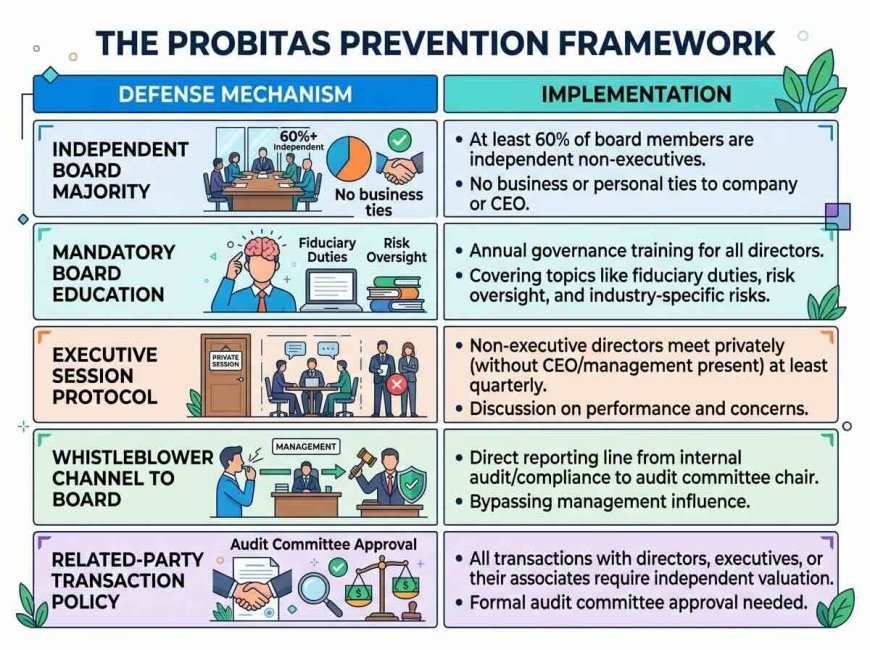
Action Step: Review your board charter. Does it mandate independent oversight, or does it enable management dominance?
MORE READ:
- Why Africa’s Richest Nations Have Weak Currencies - What Nigeria Must Do Before 2027
- Nigeria - DRC Private Sector Partnership: A New Path for African Industrialisation and Economic Sovereignty
- Lagos International Financial Centre: Nigeria’s New Economic Blueprint
- How Corporate Governance Drives the Survival and Growth of Emerging Enterprises
- Why Strong Corporate Governance Is the Secret to African Business Survival
- Digital Governance in Nigeria, Why Corporate Boards Must Treat AI, Cybersecurity and Data Ethics as Fiduciary Duties
FAILURE #2: Fraud Detection Gaps - The Corporate Embezzlement Epidemic
The Case: When Internal Controls Fail
Across Africa, companies lose an estimated 5-7% of annual revenue to fraud (Association of Certified Fraud Examiners). Many cases involve senior executives and span years before detection.
Example Pattern:
A CFO in a East African manufacturing firm created ghost vendors, processed fake invoices, and diverted $2.3 million over 4 years. Detection occurred only when an anonymous tip led to a forensic audit.
Red Flags That Were Ignored:
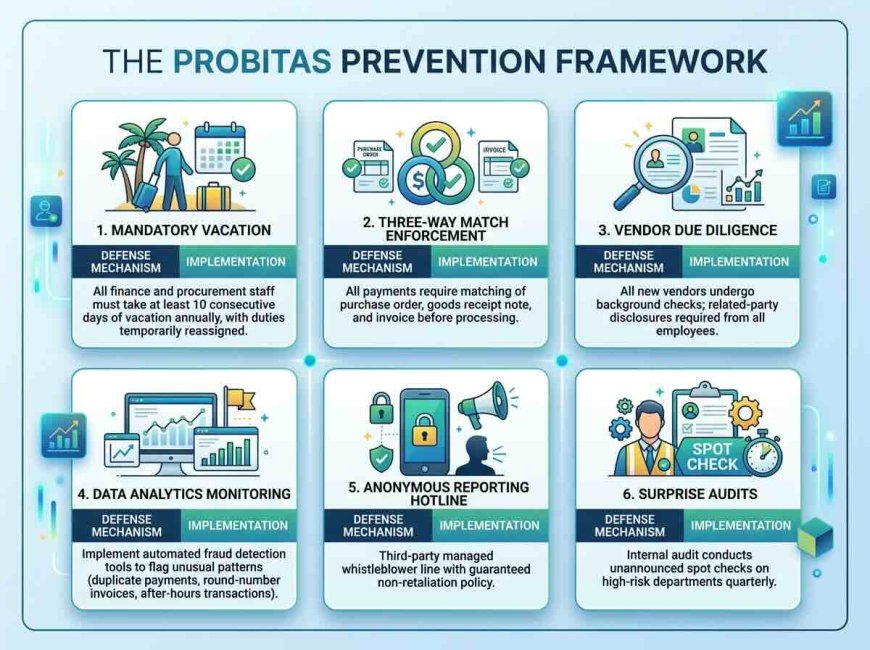
- The CFO refused to take vacation (fear of replacement exposing the scheme).
- Vendor documentation was incomplete but payments were expedited.
- Internal audit reports were delayed or suppressed.
- The CEO trusted the CFO personally and skipped oversight.
The Cost:
- Direct financial loss (often unrecoverable)
- Reputational damage affecting customer and investor confidence
- Regulatory penalties for inadequate internal controls
- Employee morale collapse
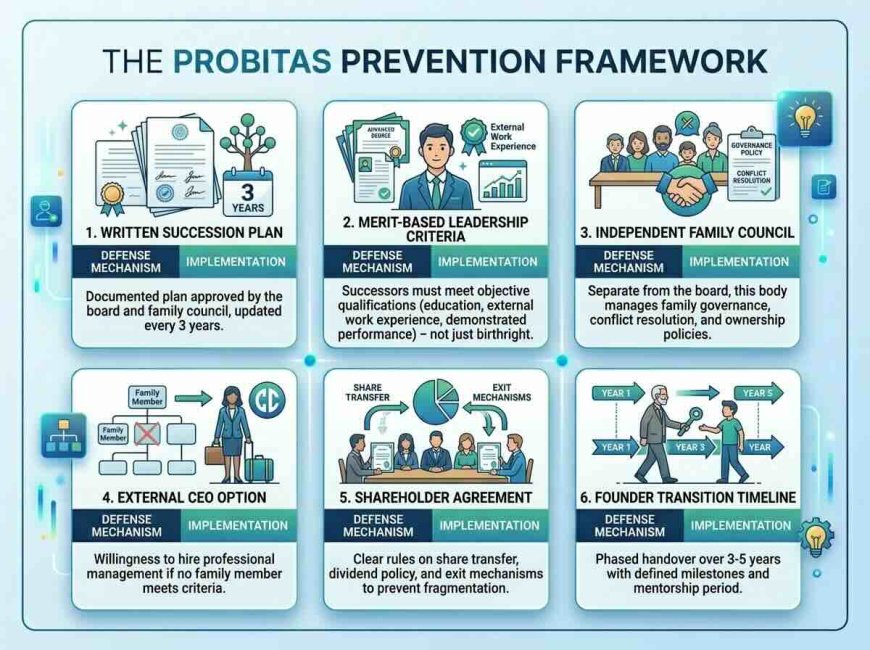
FAILURE #3: Succession Planning Disaster - The Family Business Implosion
The Case: When Founders Refuse to Plan
Family businesses account for 70-80% of African enterprises and contribute significantly to employment and GDP. Yet studies show:
- Only 30% survive to the second generation.
- Less than 10% make it to the third generation.
Common Scenario:
A founder builds a successful conglomerate over 30 years. As health declines, no succession plan exists. Multiple children claim leadership. Siblings sue each other. Key executives leave. Customers lose confidence. The business fragments or collapses.
Real Example:
A West African industrial group worth an estimated $500 million fractured into four competing entities after the founder's sudden death. Three years of litigation consumed over $40 million in legal fees. Two of the four entities failed within five years.
The Cost:
- Family wealth destruction
- Job losses for employees who depended on the business
- Lost tax revenue for governments
- Legacy erased
FAILURE #4: Regulatory Non-Compliance Penalty - When Ignorance Is Not an Excuse
The Case: The High Cost of Cutting Corners
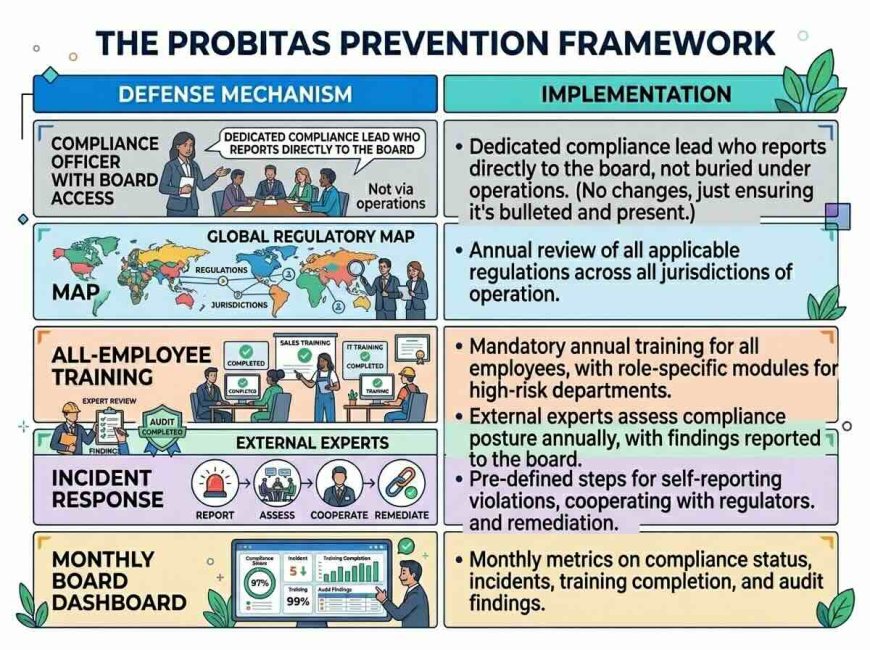
African regulators are becoming increasingly sophisticated and aggressive. Companies that treat compliance as optional face devastating penalties.
Examples:
- A Nigerian telecommunications firm fined ₦2 billion for violating data protection regulations.
- A South African mining company suspended for 18 months for environmental violations, costing hundreds of millions in lost revenue.
- A Kenyan financial institution revoked for repeated AML breaches, shareholders losing entire investment.
Common Mistakes:
- "We didn't know" - Ignorance of regulations is not a defense.
- "It's too expensive to comply" - Short-term savings vs. long-term catastrophe.
- "Everyone does it" - Herd behavior is not a compliance strategy.
- "We'll fix it when caught" - By then, it's often too late.
The Cost:
- Massive fines (often exceeding any savings from non-compliance)
- License revocation (business death)
- Criminal liability for directors and executives
- Permanent reputational damage
FAILURE #5: Cybersecurity & Data Ethics Failure - The Emerging Threat
The Case: When Digital Governance Is an Afterthought
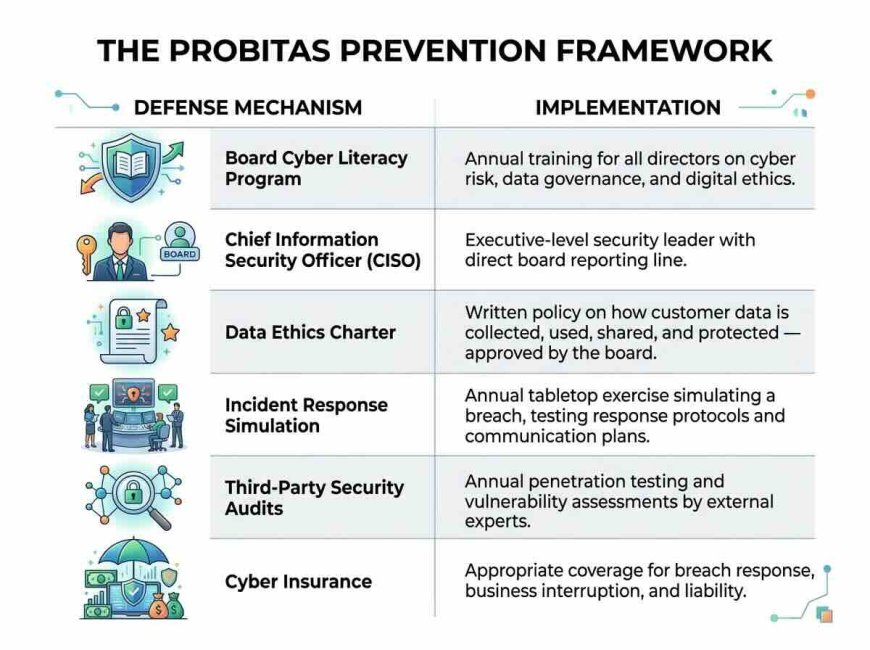
As African companies digitize, cyber risk and data ethics have become board-level issues. Yet many boards lack digital literacy.
Recent Incidents:
² A major African bank suffered a ransomware attack that shut down operations for 5 days, costing an estimated $10 million in losses and recovery.
² A telecommunications company faced class-action lawsuits after selling customer data to third parties without consent.
² A fintech startup's API vulnerability exposed 2 million customer records, leading to regulatory investigation and customer exodus.
Board-Level Gaps:
- Cybersecurity treated as an IT issue, not a strategic risk.
- No data ethics policy governing how customer data is used.
- Incident response plans either non-existent or never tested.
- Directors lack digital fluency to ask informed questions.
The Cost:
- Direct financial losses from attacks and fraud
- Regulatory fines under emerging data protection laws (NDPR, POPIA, GDPR extraterritorial reach)
- Customer trust erosion (often permanent)
- Director liability (increasingly personal)
Action Step: If your board cannot explain your company's top three cyber risks, you are one incident away from catastrophe.
THE PROBITAS GOVERNANCE EXCELLENCE FRAMEWORK
Based on these five failure modes, Probitas Report has developed a comprehensive governance excellence model for African companies:
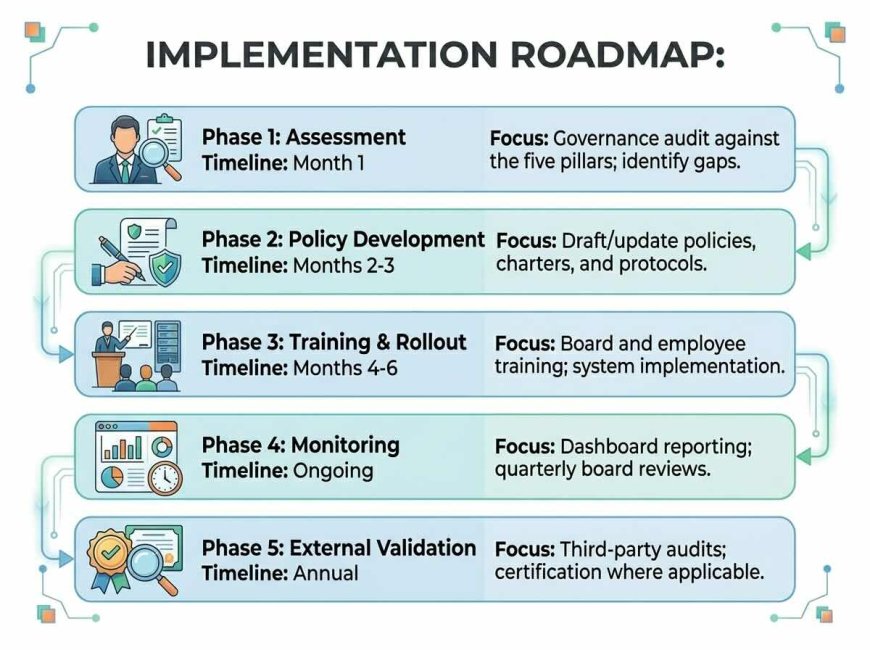
The Five Pillars:
1. Independent Oversight
- Board independence and expertise
- Active committee structures
- Executive session protocols
2. Robust Internal Controls
- Fraud detection systems
- Mandatory controls (vacation, three-way match)
- Whistleblower protections
3. Succession & Continuity
- Written succession plans
- Merit-based leadership criteria
- Family governance structures
4. Compliance Culture
- Board-level compliance ownership
- Continuous regulatory monitoring
- Training and accountability
5. Digital Governance
- Cyber literacy at the board level
- Data ethics policies
- Incident response readiness
CONCLUSION: Governance Is Not Optional
The companies that thrive in Africa's complex business environment are not those that cut corners, they are those that build trust through governance excellence. Every failure documented in this report was preventable. Every loss was unnecessary. The question is not whether you can afford to implement strong governance, it's whether you can afford not to.
Probitas Report is committed to advancing governance, integrity, and ethical business practice across Africa. Our research, analysis, and advisory services are designed to help leaders make better decisions and build enduring enterprises.
About the Author
Ohio O. Ojeagbase, PhD, FICA, SFIDR, is a corporate governance strategist, business turnaround expert, debt re-engineering professional, and publisher with over two decades of leadership experience across finance, energy, consulting, and enterprise development. He is the Visionary Publisher of Probitas Report, a platform dedicated to advancing corporate governance, integrity-in-business culture, financial integrity, and sustainable business practices across Africa.
An advocate for stronger institutions and responsible corporate leadership, Dr. Ojeagbase advises organizations on governance, debt securitization, risk, business transformation, and value creation. His work focuses on helping businesses build resilience, improve accountability, and achieve long-term growth in an increasingly complex global economy.
Through his research, publications, and thought leadership, he continues to contribute to conversations on corporate governance, debt repayment, risk management, financial sustainability, and economic development in emerging markets.
Contact: report@probitasreport.com
Stay informed and ahead of the curve! Follow The Probitas Report on WhatsApp for real-time updates, breaking news, and exclusive content especially on integrity in business and financial fraud reporting. Don’t miss any headlines, connect with us on social media @probitasreport and visit www.probitasreport.com WhatsApp Only: +234 902 148 8737
[©2026 ProbitasReport - All Rights Reserved. Reproduction or redistribution requires explicit permission.]
What's Your Reaction?