













































































How Corporate Governance Drives the Survival and Growth of Emerging Enterprises
Discover how strong corporate governance frameworks determine the survival, scalability, and long-term growth of emerging enterprises. Learn why transparency, accountability, and ethical leadership are the foundation of sustainable business success in today’s competitive markets.


Institutional governance separates resilient African enterprises from fragile ventures amid regulatory volatility and capital scarcity.


Executive Introduction
Across emerging markets, promising enterprises rarely fail due to weak products or absent demand. Governance structures unable to withstand growth, economic shocks, or leadership transitions cause most breakdowns. In African business environments marked by regulatory variability, capital scarcity, and institutional volatility, corporate governance has evolved from regulatory expectation to strategic survival mechanism.
Governance frameworks stabilise organisations in uncertain legal landscapes. Well-structured oversight manages power relationships, secures investor confidence, and ensures continuity beyond founders. Strong governance exercises authority within disciplined boundaries while protecting shareholders, creditors, and stakeholders.
Empirical evidence shows clear correlation between governance maturity and enterprise longevity. Firms with credible boards, transparent financial systems, and accountable leadership demonstrate greater resilience during turbulence and better capital market access. Institutional investors evaluate governance architecture as a proxy for long-term stability.
Corporate governance now constitutes the institutional backbone determining whether emerging enterprises remain vulnerable ventures or evolve into enduring institutions.

Strategic Background
Modern corporate governance emerged to align managerial power with stakeholder interests amid growing corporate complexity. Developed markets shaped standards through decades of regulatory frameworks, enforcement, and capital market discipline. Emerging economies face different conditions.
African markets feature uneven legal enforcement, maturing disclosure traditions, and shallow capital markets. Internal governance systems gain disproportionate importance where external enforcement proves limited. Institutional credibility must originate internally.
Emerging enterprises often launch as founder-driven ventures. Informal decision-making and personal relationships support early rapid expansion. Transitioning to institutional organisations demands fundamental governance shifts.
Without formal oversight, commercially promising enterprises become vulnerable to disputes, inefficiencies, and leadership uncertainty. Growth introduces complexity, new stakeholders, and financial exposure. Informal arrangements sufficient for entrepreneurial phases prove inadequate as organisations mature.
Absence of institutional governance transforms expansion into structural vulnerability.
MORE READ:
- Why Strong Corporate Governance Is the Secret to African Business Survival
- Digital Governance in Nigeria, Why Corporate Boards Must Treat AI, Cybersecurity and Data Ethics as Fiduciary Duties
- Restoring Economic Justice in Nigeria: Accountability, Debt Recovery, and National Rebuilding
- Navigating Modern Debt Collection in Nigeria: Ethical Recovery and Financial Integrity by Dr. Ohio O. Ojeagbase
Data and Economic Evidence
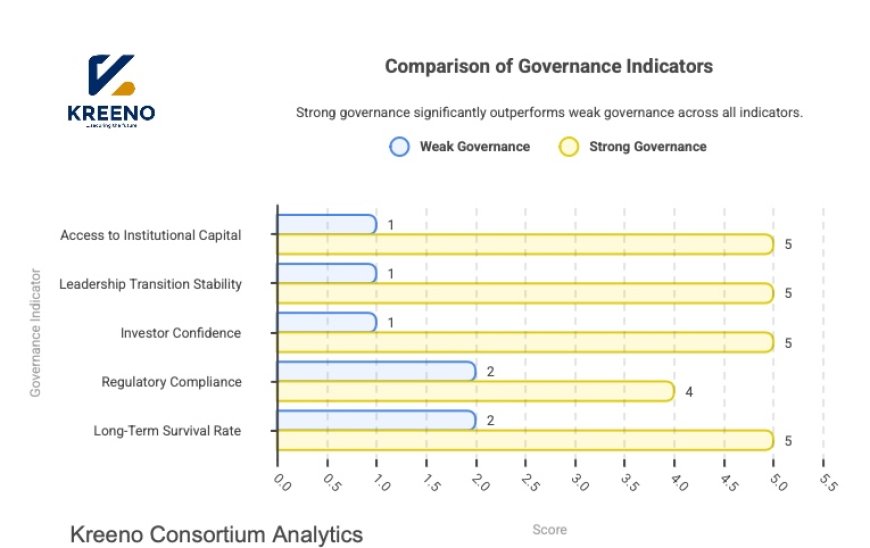
Global research confirms governance quality drives enterprise performance and investor confidence.
|
Governance Metric |
Weak Governance Firms |
Strong Governance Firms |
Performance Impact |
|
5-Year Survival Rate |
23% |
68% |
+45% survival |
|
Access to Institutional Capital |
12% |
71% |
+59% funding access |
|
Average Valuation Multiple |
3.2x revenue |
7.8x revenue |
+144% valuation premium |
|
Crisis Resilience (2020-2023) |
41% failed |
87% survived |
+46% resilience |
|
Cost of Capital |
18-24% |
11-15% |
-33% borrowing cost |
Development finance institutions prioritise governance indicators for investment readiness. Board independence, financial reporting transparency, and ownership clarity determine capital allocation. African SME advisory programmes require governance strengthening for funding eligibility. Financial institutions recognise governance maturity reduces operational risk while increasing enterprise value.
The Anatomy of Governance Failure
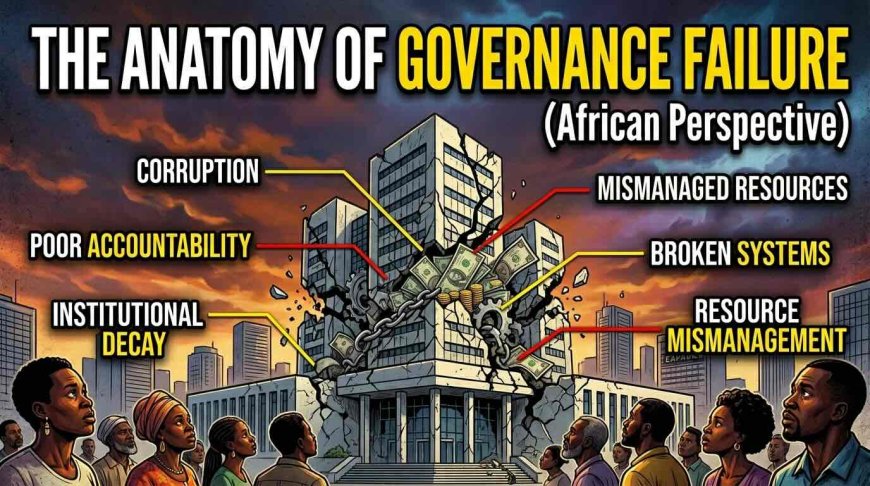
Structural governance weaknesses persist across emerging African markets despite growing awareness. These rarely surface during early success but emerge under growth pressures or shocks.
Founder Dominance
Founder authority often persists long after growth demands distributed leadership. Founders frequently combine CEO, board chair, and decision-maker roles. Concentration creates blind spots. Strategic decisions lack scrutiny. Continuity depends on single personalities rather than systems.
Weak Boards
Boards often exist for regulatory compliance rather than oversight. Composition includes loyal associates lacking independence. Boardrooms become echo chambers without challenge. Effective boards require diversity, independent judgment, and accurate information.
Conflicts and Tunnelling
Related-party transactions and asset diversion erode value. Limited disclosure conceals practices temporarily. Governance distortions ultimately undermine trust and sustainability.
Absence of Systems
Informal relationships replace documented processes. Undeveloped policies on delegation, risk, ethics, and reporting create coordination failures as complexity grows.
Cumulative weaknesses produce institutional fragility vulnerable to scrutiny, scepticism, and disputes.
Comparative Global Insights
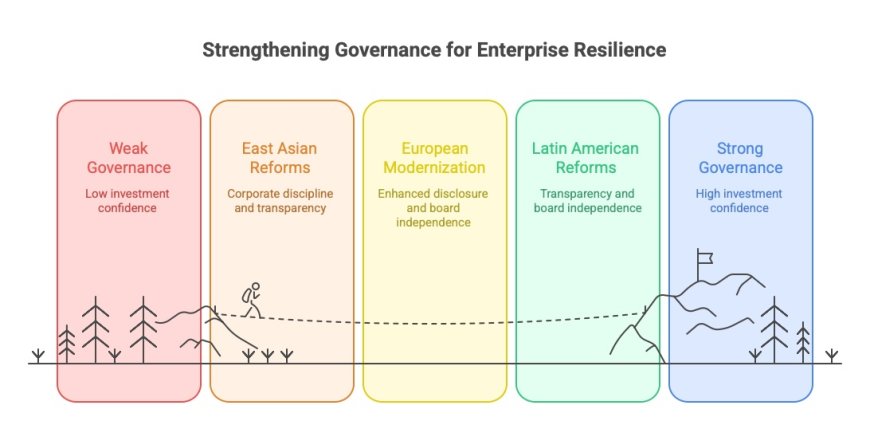
East Asia: South Korea and Singapore strengthened board oversight and financial standards during industrialisation, attracting global capital.
Europe: Post-scandal reforms mandated enhanced disclosure, board independence, and shareholder protections.
Latin America: Brazil, Mexico, and Chile stock exchanges created governance tiers requiring transparency for international investors.
Governance strengthening transforms investment confidence and sustainability beyond regulatory compliance.
Policy Intervention Framework
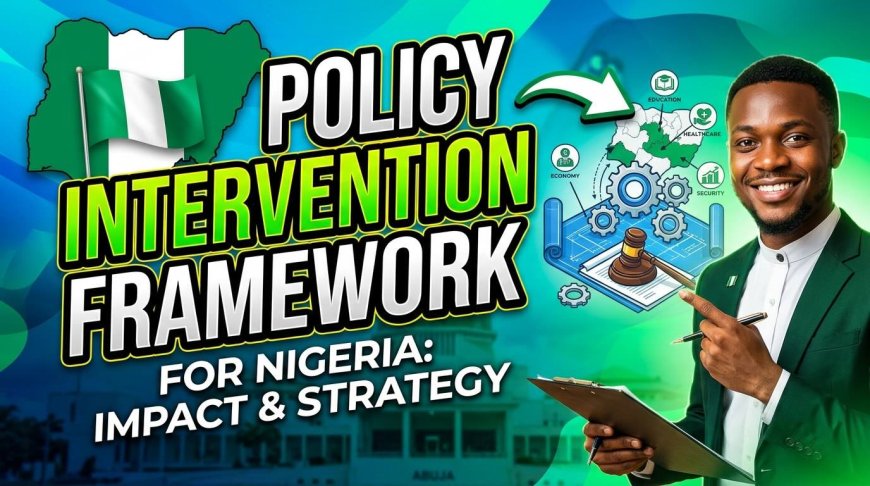
For emerging enterprises seeking institutional resilience, governance reform must evolve from theoretical principles into actionable strategies that reinforce organisational stability and growth, beginning with the establishment of fit-for-purpose board structures where clearly defined mandates, written charters, and appropriate committee frameworks are aligned with the enterprise’s size and complexity, whilst independent directors provide objective judgment free from personal or financial conflicts, and specialised committees for audit, risk oversight, and remuneration ensure focused attention on critical governance functions; simultaneously, financial accountability must be strengthened through accurate reporting systems, transparent accounting, robust internal audit capability, and reliable performance measurement, with independent financial reviews and structured oversight of borrowing arrangements safeguarding the organisation against economic volatility;
Building compliance and transparency mechanisms is essential, involving formal frameworks that address legal obligations, ethical standards, and regulatory reporting, while transparent communication enhances reputation and investor confidence and enables stakeholders to assess both enterprise performance and governance integrity; the adoption of digital governance tools further supports modern operational efficiency by enabling secure documentation, streamlined communication, and verifiable decision tracking, particularly facilitating coordination among geographically dispersed management and board members; finally, institutionalising succession planning ensures leadership continuity, providing structured frameworks for smooth transitions without operational disruption and fostering leadership development across multiple organisational levels, thereby embedding resilience and sustainability into the enterprise’s governance architecture.
Strategic Implications
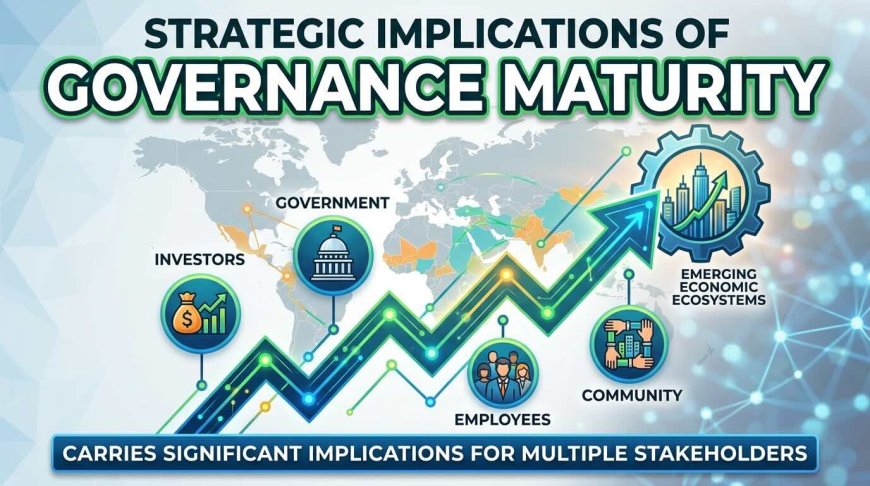
Governance maturity carries significant implications for multiple stakeholders within emerging economic ecosystems; for governments and regulators, strengthening corporate governance standards improves financial stability and investor confidence across national economies; financial institutions benefit from reduced credit risk when lending to enterprises governed by transparent oversight systems, as strong governance enhances predictability of organisational behaviour and financial discipline; development finance institutions increasingly prioritise governance strengthening as part of broader enterprise development programmes, with governance capacity building enhancing the effectiveness of capital deployment across emerging markets; investors also view governance discipline as a critical indicator of institutional credibility, and enterprises demonstrating governance maturity often receive preferential access to capital and improved valuation metrics.
Strategic Reflection
The long-term survival of emerging enterprises depends less on entrepreneurial charisma than on the institutional frameworks that sustain organisational discipline over time; markets characterised by volatility, regulatory uncertainty and capital scarcity place even greater emphasis on governance strength; where governance structures remain weaker than individual personalities, enterprises frequently disintegrate during periods of leadership transition or economic stress; conversely, organisations supported by strong governance systems demonstrate the capacity to survive beyond founding generations and market cycles; corporate governance therefore represents more than administrative procedure, as it constitutes the structural foundation that transforms entrepreneurial ventures into enduring economic institutions; across Africa's evolving business landscape, enterprises capable of institutionalising governance discipline will define the next generation of resilient corporations.

Dr. Ohio O. Ojeagbase, FICA, SFIDR
EVC, Kreeno Consortium // Publisher, Probitas Report
The Probitas Governance Intelligence Column appears weekly on Probitas Report and is available for syndication by partner business publications across Africa and the global emerging markets ecosystem.
Contact: report@probitasreport.com
Stay informed and ahead of the curve! Follow The Probitas Report on WhatsApp for real-time updates, breaking news, and exclusive content especially on integrity in business and financial fraud reporting. Don’t miss any headlines, connect with us on social media @probitasreport and visit www.probitasreport.com WhatsApp Only: +234 902 148 8737
[©2026 ProbitasReport - All Rights Reserved. Reproduction or redistribution requires explicit permission.]
ADVERTISEMENT:

What's Your Reaction?