


































































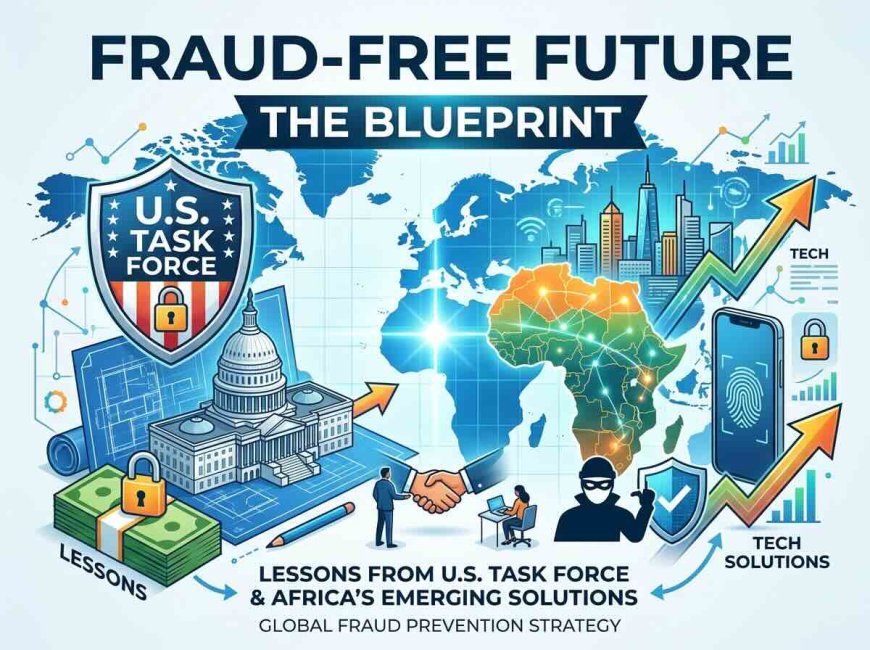
The Blueprint for a Fraud-Free Future, Lessons from U.S. Task Force and Africa’s Emerging Solutions
An analysis of how the U.S. Task Force model and Africa’s evolving anti-fraud systems shape a scalable framework for fraud prevention, financial integrity, and institutional trust across emerging markets.


Introduction


Financial fraud has evolved into one of the most formidable threats to economic stability, public trust, and sustainable development worldwide. Nowhere is this more evident than in Africa, where illicit financial flows (IFFs) drain more than $80 billion from the continent annually with such funds that could otherwise build classrooms, equip hospitals, and pave roads for millions. In Nigeria alone, digital payment fraud losses, despite a significant 51 per cent year-on-year decline, still amounted to ₦25.85 billion in 2025, highlighting the persistent vulnerability of even the most rapidly advancing digital economies.
In response to these challenges, the United States has taken a decisive step forward. In March 2026, President Donald Trump signed an Executive Order establishing the Task Force to Eliminate Fraud, a sweeping interagency initiative designed to combat fraud, waste, and abuse across federal benefit programs. This bold policy move offers not only a model for advanced economies but also a powerful blueprint that Africa can adapt and implement. This article examines the U.S. Task Force’s core provisions, introduces Kreeno’s Logical Commander Solution as a cutting-edge fraud prevention tool, and provides actionable recommendations for how Nigeria and the broader African continent can follow this Executive Order to build a more resilient, transparent, and fraud-resistant economic future.

Part I: The U.S. Executive Order Establishing the Task Force to Eliminate Fraud
A. A Three‑Pronged Strategy: Transparency, Pre‑Payment Controls, and Cross‑Agency Coordination
The Executive Order establishing the Task Force to Eliminate Fraud was not an isolated action but rather the culmination of a series of anti‑fraud measures rolled out by the Trump administration throughout 2025 and early 2026. Together, these measures form a comprehensive, multilayered defense against public‑sector fraud.
The foundation was laid in March 2025 with Executive Order 14249—Protecting America’s Bank Account Against Fraud, Waste, and Abuse. This order explicitly recognised that the federal government processes trillions of dollars annually yet lacks sufficient controls to track transactions flowing through the U.S. General Fund. The Government Accountability Office estimates that the federal government loses between $233 billion and $521 billion annually to fraud. Executive Order 14249 therefore mandated that the Department of the Treasury be empowered to conduct improper payment and fraud prevention screening prior to disbursing funds on behalf of agencies, which is a shift from reactive recovery to proactive prevention. It also required agencies to provide the Treasury with the information needed to track transactions in greater detail and promoted the consolidation of core federal financial systems.
Building on this data‑centric approach, the administration issued an Executive Order “stopping waste, fraud, and abuse by eliminating information silos” later that same month. Agency heads were directed to grant full and prompt access to unclassified agency records, data, and systems to federal officials in order to identify waste, fraud, and abuse. This included authorising both intra‑ and inter‑agency sharing of records, granting the Secretary of Labor access to unemployment data and payment records, and ensuring that all state programmes receiving federal funds provide comprehensive data for enhanced oversight. The backdrop to these measures was stark: in fiscal year 2023 alone, the Biden administration reported an estimated $236 billion in improper payments, and over the previous 20 years, the federal government had made an estimated $2.7 trillion in such improper payments.
The culminating measure came in March 2026, when President Trump signed the Executive Order formally establishing the Task Force to Eliminate Fraud. Vice President JD Vance was appointed to lead the task force, with Federal Trade Commission Chair Andrew Ferguson serving as vice chair. The order instructs the task force to lead a nationwide effort to combat fraud, waste, and abuse in federal benefit programmes, including housing, food, healthcare, and financial assistance. The task force is charged with:
- Overseeing stronger eligibility checks;
- Introducing preventive pre‑payment controls;
- Identifying emerging fraud risks;
- Breaking up organised fraud schemes;
- Establishing baseline anti‑fraud standards covering identity verification, documentation, risk management, and auditing; and
- Requiring member agencies to create measurable implementation plans.
Crucially, the task force builds on earlier initiatives, including a new Department of Justice fraud enforcement division established in January 2026 to coordinate investigations and disrupt fraud schemes. Stephen Miller, the White House homeland security advisor, estimated that the task force could return billions of dollars to American taxpayers.
B. Why This Approach Works: Key Principles
The U.S. model succeeds because it rests on three foundational principles that are universally applicable:
1. Data transparency and interoperability: By tearing down information silos between agencies, the U.S. government has enabled real‑time, cross‑jurisdictional fraud detection.
2. Pre‑payment controls: Shifting from “pay and chase” to “verify before paying” dramatically reduces improper payments before they occur.
3. High‑level political accountability: Placing the task force under the direct leadership of the Vice President signals that fraud elimination is a national priority with clear lines of authority and measurable outcomes.

Part II: Kreeno’s Logical Commander Solution – A Private Sector Force Multiplier
A. The Logical Commander Philosophy
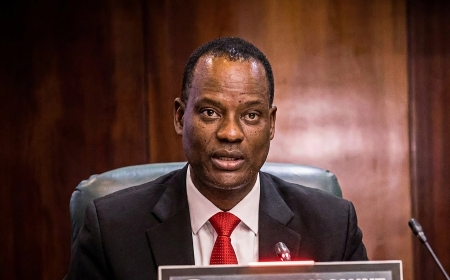
Government action alone cannot defeat fraud. The most sophisticated fraudsters operate across borders, exploit legal loopholes, and leverage technology faster than public agencies can adapt. As the Chairman of Nigeria’s Independent Corrupt Practices and Other Related Offences Commission (ICPC), Dr. Musa Aliyu, has bluntly acknowledged: “Criminal networks remain faster, richer, and more technologically agile than government agencies”. This is precisely where private‑sector innovation becomes indispensable.
Kreeno Consortium has emerged as a leading private investigative and fraud prevention organisation, offering what it calls the Logical Commander approach to fraud prevention: a holistic, intelligence‑led framework that integrates advanced digital forensics, real‑time surveillance, and proactive counter‑fraud strategies before financial crimes can take root. As the consortium itself states: “Fraud prevention is the first and most crucial line of defense. It’s far more effective and less costly to stop a fraudster than to chase them after the fact”.
B. Core Capabilities of the Logical Commander Solution
Kreeno’s Logical Commander solution is not a single product but rather an integrated methodology spanning multiple domains. The consortium provides a comprehensive range of services, including asset protection, asset recovery, debt recovery, cybersecurity, counter‑fraud investigation, research, education, and forensic investigations. Key features include:
- Advanced digital forensics: Leveraging forensic auditing and digital investigation techniques to trace hidden assets, uncover shell company schemes, and identify systematic fraud patterns.
- Intelligence‑led investigations: Moving beyond reactive casework to proactive intelligence gathering, enabling the early identification of emerging fraud risks across sectors such as banking, energy, and the public sector.
- Public‑private partnership integration: Kreeno has already forged a strategic partnership with the Nigeria Police Special Fraud Unit (PSFU) under the leadership of previous successive Commissioners of Police in the last decade and Nigeria Security and Civil Defense Corps (NSCDC) Oyo State Command . This collaboration combines Kreeno’s investigative and debt‑recovery expertise with both NSCDC and PSFU’s statutory enforcement authority to tackle sophisticated financial crimes, including cyber fraud, corporate embezzlement, and identity theft. As Dr. Ohio Ojeagbase noted: “No single entity can combat financial fraud alone. It demands a collective effort, harnessing both public and private resources”.
- AI‑powered fraud detection: Kreeno’s advisory group provides AI advisory services to help businesses adopt the right tools for compliance, transaction monitoring, and fraud prevention, including explainable artificial intelligence that can adapt to local fraud patterns.
The outcomes of the Logical Commander approach are tangible and deterrent‑driven: asset seizures, financial blacklists, perpetual monitoring of known fraudsters, and a clear message that impunity is no longer acceptable.
Logical Commander actively invests in intellectual property. Our technology is protected by multiple USPTO patent applications, reflecting our commitment to innovation and safeguarding our proprietary solutions.
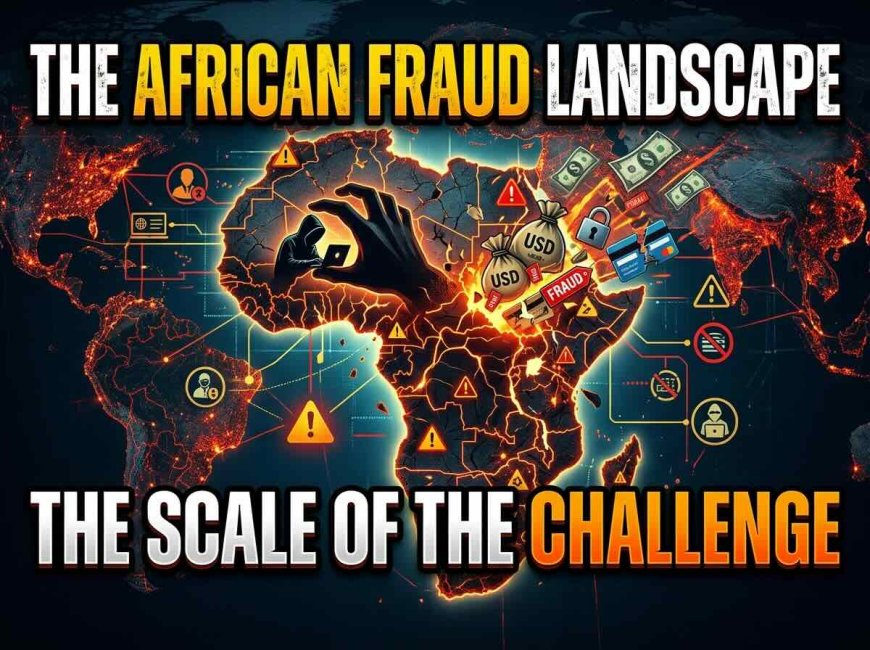
Part III: The African Fraud Landscape – The Scale of the Challenge
To understand why Africa urgently needs its own version of the U.S. Task Force, one must first appreciate the staggering scale of the problem. Africa loses more than $80 billion annually to the convergence of cybercrime, corruption, and illicit financial flows—a sum equivalent to approximately 3.7 per cent of the continent’s total GDP, and roughly twice the amount the continent receives in foreign aid.
Nigeria, as Africa’s largest economy, exemplifies both the severity of the threat and the progress being made. According to the Nigeria Inter‑Bank Settlement System (NIBSS), digital payment fraud losses in Nigeria declined by 51 per cent in 2025 to ₦25.85 billion, down from ₦52.26 billion in 2024. While this represents genuine progress, the numbers remain alarming. The dramatic spike in 2024 was driven largely by a single fraud incident involving one banking entity that incurred ₦31.1 billion in losses. Card‑related fraud alone rose by 306.2 per cent in the first quarter of 2025.
More worryingly, fraud reporting declined by approximately 34 per cent in the final quarter of 2025, with some institutions reporting zero incidents. As Premier Oiwoh, Managing Director of NIBSS, warned: “In several cases investigated last year, individuals involved in fraud simply moved to other institutions because incidents were not reported”. The most prevalent fraud technique remains social engineering, with insider abuse identified as the greatest threat.
On a continental scale, the drivers are even more diverse and sophisticated: business email compromise, ransomware attacks, mobile money fraud, crypto‑laundering, and organised criminal networks exploiting weak cross‑border coordination. The ICPC has responded by establishing a Cybercrime and Digital Forensics Unit and enhancing blockchain tracing capabilities, but as Dr. Musa Aliyu, SAN emphasised, “criminal networks remain faster, richer, and more technologically agile than government agencies”.
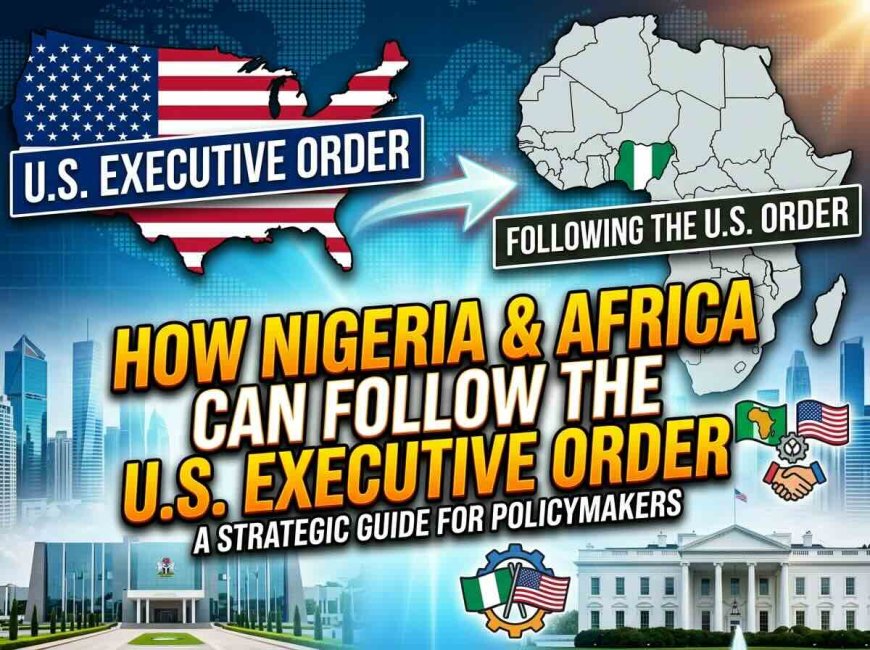
Part IV: How Nigeria and Africa Can Follow the U.S. Executive Order
The U.S. Task Force to Eliminate Fraud offers a clear, actionable blueprint. Africa’s adoption of this model must be adapted to the continent’s unique realities—fragmented regulatory landscapes, resource constraints, and the urgent need for both public‑sector reform and private‑sector innovation.
Recommendation 1: Establish a Continental Anti‑Fraud Task Force
The African Union should establish a Pan‑African Task Force to Eliminate Fraud, modelled directly on the U.S. Executive Order. This task force should be chaired at the highest political level, ideally by the AU Commission Chairperson or a designated private sector professionals with government support, and should include representation from the African Union Development Agency (AUDA‑NEPAD), the African Peer Review Mechanism, the African Financial Intelligence Units, and the African Union’s Cyber Security and Personal Data Protection Convention (Malabo Convention) secretariat.
The mandate of this continental task force should include:
- Coordinating cross‑border fraud investigations and intelligence sharing;
- Establishing baseline anti‑fraud standards for identity verification, documentation, risk management, and auditing across member states;
- Overseeing pre‑payment controls for disbursements from continental funds and development programmes;
- Identifying emerging fraud risks, including crypto‑laundering and organised fraud syndicates; and
- Requiring member states to submit measurable implementation and reporting plans.
The Malabo Convention, which entered into force in June 2023, already provides a legal framework covering electronic transactions, personal data protection, cybersecurity, and cybercrime. However, only 15 member states have ratified it as of 2026. The establishment of a task force would provide the enforcement and coordination mechanism that the Convention currently lacks.
Recommendation 2: Mandate Data Transparency and Pre‑Payment Screening
Individual African nations should follow Executive Order 14249 by empowering their central banks or treasuries to conduct pre‑disbursement fraud screening across all government payment systems. The Central Bank of Nigeria (CBN), through its Nigeria Electronic Fraud Forum (NeFF), has already made significant strides. Since its inauguration in 2011, NeFF has driven the adoption of two‑factor authentication, enhanced transaction monitoring, and a centralised fraud reporting and intelligence‑sharing framework. The forum also operates a centralised Person of Interest (POI) Portal, which serves as a repository of fraudsters, watchlisted individuals, politically exposed persons, and the CBN’s black book of fraudulent ex‑bank staff.
What is needed now is a legal mandate similar to the U.S. executive order: requiring all ministries, departments, and agencies—as well as all state programmes receiving federal funds—to provide comprehensive data to the central bank or treasury for pre‑payment screening. This would eliminate the information silos that currently allow fraudsters to move undetected across different pockets of government.
Recommendation 3: Scale Up Digital Identity Infrastructure
The foundation of any pre‑payment fraud screening system is a robust, secure, and universally accessible digital identity framework. Nigeria has made commendable progress in this area. Over 126 million Nigerians have been enrolled in the National Identity Database, and the mandatory linkage of National Identification Numbers (NIN) with SIM cards has significantly reduced fraud and enhanced national security, according to President Tinubu. The recent launch of the NINAuth mobile application, which is a digital identity authentication tool that allows seamless and secure verification of NIN across government services including SIM registration, passport processing, tax filings, and access to government intervention programmes. NIMC has also partnered with over 50 organisations, from health and education to correctional services and diaspora centres, to widen access and integration.
However, significant gaps remain. Only 60 per cent of Nigerian children under five are registered at birth, and gender gaps persist in enrolment figures. For Africa as a whole, the priority must be to accelerate universal digital identity coverage linked to biometric verification, public key infrastructure, and blockchain‑based integrity mechanisms to make identity records tamper‑proof. The recently launched National Digital Trustmark Initiative, which verifies and certifies authentic online platforms and e‑commerce websites through corporate registration, KYC documentation, and address validation, which demonstrates how identity verification can be extended beyond individuals to legitimate businesses.
Recommendation 4: Formalise Public‑Private Partnerships and Deploy Advanced Technology
The U.S. model relies heavily on interagency coordination. Africa must go further by formalising statutory public‑private partnerships with private investigative and fraud prevention organisations like Kreeno Consortium. The existing partnership between Kreeno and both the Nigeria Police Special Fraud Unit and NSCDC provides a template that can be replicated across the continent: private‑sector technical expertise, digital forensics, and intelligence capabilities, combined with public‑sector enforcement authority and legal mandate.
African governments should create legal frameworks that enable private fraud prevention firms to operate in close collaboration with law enforcement, share data securely, and participate in joint task forces. The Logical Commander approach involves integrating digital forensics, AI‑powered detection, intelligence‑led investigations, and asset recovery which KREENO is known for and should be embedded as a standard component of national fraud strategies. As the Chairman of Kenya’s Ethics and Anti‑Corruption Commission recently urged, “The use of artificial intelligence, blockchain, and data mining tools is essential to stay ahead in the investigation of crimes involving virtual currencies and complex financial transactions”. In Nigeria, AI‑powered fraud detection systems that can adapt to local fraud patterns, distinguishing between sophisticated money‑laundering schemes in Lagos and mobile money fraud in rural areas are already being explored as a force multiplier for the EFCC.
Recommendation 5: Strengthen Regional Harmonisation and Capacity Building
Africa’s fragmented regulatory landscape remains a major vulnerability. Fraudsters exploit differences in legal frameworks, extradition treaties, and enforcement capabilities across borders. The African Union must accelerate the harmonisation of national cybersecurity and anti‑fraud laws under the Malabo Convention, and establish operational cybersecurity centres to mitigate risks related to cyberattacks, data breaches, and financial crime.
At the national level, dedicated cybercrime and digital forensics units such as the one already established by the ICPC must be adequately funded and staffed. Cross‑border training programmes, secondments, and joint investigations between member states should become routine, not exceptional. Stephen Miller’s estimate that the U.S. task force could return billions to taxpayers is not just American rhetoric; it applies equally to Africa, where every billion dollars recovered from fraudsters is a billion dollars that can be redirected to health, education, and infrastructure.
Recommendation 6: Mandate Measurable Outcomes and Public Accountability
Perhaps the most important lesson from the U.S. Task Force is the insistence on measurable implementation plans. Each member agency must produce quantifiable targets: reduction in improper payment rates, number of fraud rings dismantled, volume of assets recovered, and percentage increase in fraud reporting compliance. These metrics must be made publicly available to ensure accountability.
African nations should adopt similar transparency mandates. The decline in fraud reporting in Nigeria despite the significant reduction in actual losses is a clear warning sign: without mandatory reporting requirements and penalties for non‑compliance, the effectiveness of any anti‑fraud system will be undermined. The CBN and NIBSS must enforce penalties for institutions and SMEs that fail to report fraud incidents to the appropriate law enforcement agencies, as emphasised in the 2026 NeFF Technical Kick‑Off session. Public scorecards tracking national and sub‑national fraud metrics would not only drive accountability but also restore the public trust that fraud so thoroughly erodes.

Conclusion: From Blueprint to Action
The Executive Order establishing the Task Force to Eliminate Fraud represents a paradigm shift in how governments can confront financial crime. By prioritising data transparency, pre‑payment controls, high‑level political leadership, and measurable outcomes, the U.S. has provided a template that transcends national boundaries. Africa, facing fraud losses of over $80 billion annually, cannot afford to ignore this blueprint.
Nigeria has already taken encouraging steps: a declining fraud loss trajectory, a rapidly expanding digital identity infrastructure, public‑private partnerships with organisations like Kreeno Consortium, and institutional mechanisms like NeFF and the POI Portal. However, these initiatives remain fragmented and lack the coordinating force of a dedicated, high‑level task force.
The Logical Commander solution offered by Kreeno Consortium demonstrates what is possible when private‑sector innovation is harnessed as a force multiplier for public‑sector enforcement. As Dr. Aliyu of the ICPC observed: “The Africa we want is within reach, but only if we secure our digital space”. The path to that Africa is now clear: establish a Pan‑African Task Force to Eliminate Fraud, mandate data transparency and pre‑payment screening, scale up digital identity infrastructure, formalise technology‑driven public‑private partnerships, harmonise regional frameworks, and demand measurable accountability. The blueprint is written. The question is whether Africa’s leaders will have the courage to follow it.

About Kreeno Debt Recovery And Private Investigation Agency
KREENO Debt Recovery and Private Investigation Agency is a specialist firm focused on debt recovery, forensic investigation, and financial intelligence services across Nigeria and wider African markets. The agency supports financial institutions, corporations, and high-value clients in recovering distressed assets, tracing hidden funds, and resolving complex financial disputes through structured, legally compliant methods. The firm combines investigative discipline with data-driven analysis to deliver measurable recovery outcomes while preserving client reputation and regulatory integrity. Its work spans corporate debt recovery, fraud investigation, asset tracing, due diligence, and risk assessment, positioning KREENO as a trusted partner in financial enforcement and accountability.
ADVERTISEMENT:
MORE READ:
- Lagos International Financial Centre: Nigeria’s New Economic Blueprint
- How Corporate Governance Drives the Survival and Growth of Emerging Enterprises
- Why Strong Corporate Governance Is the Secret to African Business Survival
- Digital Governance in Nigeria, Why Corporate Boards Must Treat AI, Cybersecurity and Data Ethics as Fiduciary Duties
Contact: report@probitasreport.com
Stay informed and ahead of the curve! Follow The Probitas Report on WhatsApp for real-time updates, breaking news, and exclusive content especially on integrity in business and financial fraud reporting. Don’t miss any headlines, connect with us on social media @probitasreport and visit www.probitasreport.com WhatsApp Only: +234 902 148 8737
[©2026 ProbitasReport - All Rights Reserved. Reproduction or redistribution requires explicit permission.]
What's Your Reaction?