








































































Ethical Leadership in the Age of Corporate Distrust: Rebuilding Institutional Confidence
Discover how ethical leadership restores trust in institutions amid corporate scandals and technological disruption. Learn actionable governance practices that align strategy with integrity, transparency, and accountability to build lasting institutional credibility.


How governance must move beyond rhetoric to measurable ethical performance


Introduction
Trust in institutions has weakened under repeated corporate scandals, technological disruption, and global political uncertainty. High-profile cases such as Enron, WorldCom, Madoff, and the global financial crisis show that rules alone cannot guarantee ethical conduct.
Surveys reveal a striking contradiction. People often consider corporations more competent than governments in solving social and economic challenges. Yet confidence in corporate leadership remains fragile. Executives are perceived to distort information or prioritize profit over transparency. This tension forms the core of modern institutional skepticism.
In this environment, ethical leadership is decisive. Trust is not built by policies or statements alone. It grows when actions consistently reflect declared values. Decisions aligned with integrity and accountability gradually restore confidence.

Background and Context
Over the past two decades, corporate scandals prompted regulators to strengthen compliance, internal controls, and monitoring frameworks. Despite these efforts, misconduct continues in organizations such as Volkswagen and Wells Fargo, proving that policies cannot replace principled leadership.
Where executives act with integrity, organizations display stronger accountability, higher public confidence, and better performance. Leadership behavior becomes the bridge between governance rules and real institutional outcomes.
Digital technologies and artificial intelligence introduce additional complexity. People trust technology firms’ capabilities but remain skeptical about the ethical implications of rapid innovation. Corporations are expected to deliver economic progress and employment, but stakeholders increasingly demand transparency in how decisions affect society.
Trust grows when decision-making is visible. When leaders explain the reasoning behind strategies, stakeholders understand choices and outcomes. Consistent transparency strengthens institutional credibility over time.
MORE READ:
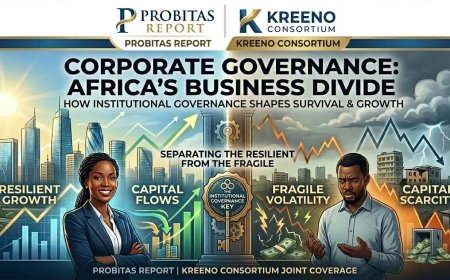
- How Corporate Governance Drives the Survival and Growth of Emerging Enterprises
- Why Strong Corporate Governance Is the Secret to African Business Survival
- Digital Governance in Nigeria, Why Corporate Boards Must Treat AI, Cybersecurity and Data Ethics as Fiduciary Duties
- Restoring Economic Justice in Nigeria: Accountability, Debt Recovery, and National Rebuilding
- Navigating Modern Debt Collection in Nigeria: Ethical Recovery and Financial Integrity by Dr. Ohio O. Ojeagbase
Ethics, Trust, and Organizational Performance
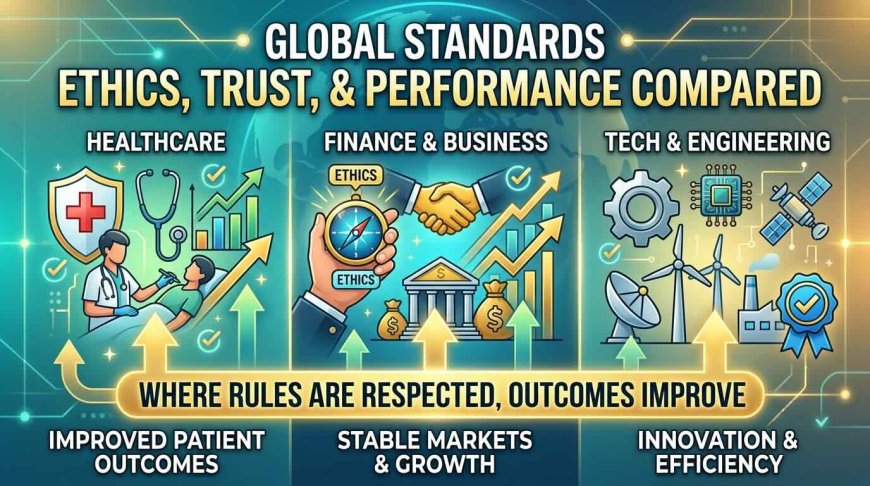
Across industries, organizations prioritizing ethical governance perform more sustainably. Cultures emphasizing fairness and accountability reduce pressure on employees to compromise standards. Open reporting systems encourage staff to raise concerns before issues escalate.
Global indicators show confidence in large corporations has declined, yet trust is often higher within individual workplaces. Credibility develops gradually through everyday leadership actions rather than broad institutional narratives.
Research confirms that transparent oversight and consistent accountability help rebuild public confidence. Ethics education is critical. Training that explores real-world decision scenarios improves leaders’ ability to respond to complex challenges. Instead of simply teaching compliance, programs encourage critical thinking about responsibility, fairness, and long-term consequences. Leaders equipped in this way are better prepared to guide organizations through uncertainty and change.
Key Insights and Analysis
1. The Trust and Innovation Gap
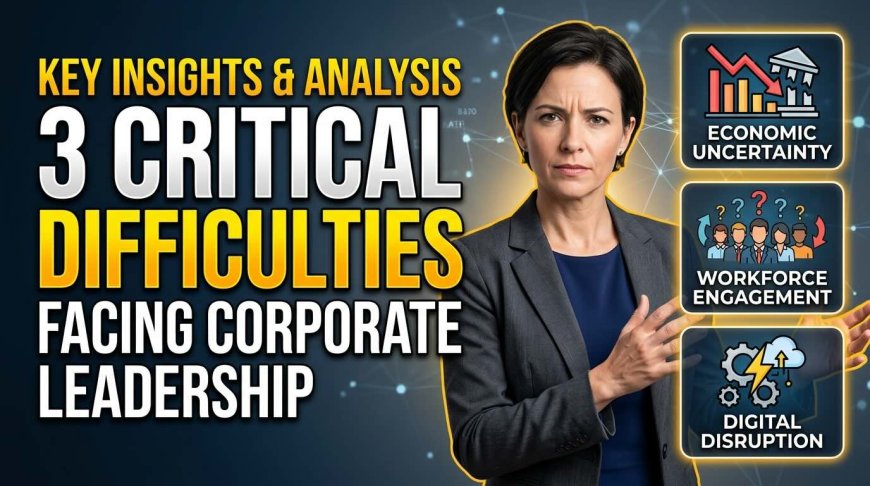
Rapid technological change has heightened public concern. Surveys reveal that fewer than 25 percent of people believe emerging technologies are adequately governed. Expectations of corporate leadership remain high. Business leaders are seen as central to guiding societal transformation, particularly regarding artificial intelligence, automation, and digital governance.
Skepticism increases when decisions about technology lack transparency or ethical consideration. Leaders can bridge this gap by clearly communicating risks, benefits, and long-term impacts. Demonstrating that innovation aligns with societal values reassures stakeholders.
2. Ethical Leadership as Culture, Not Communication
Corporate history shows ethics cannot be sustained through policy statements alone. Culture determines whether standards are respected in practice. Leaders shape culture through the behaviors they reward, the misconduct they tolerate, and the decisions they defend publicly.
Workplaces emphasizing transparency and fairness experience fewer ethical failures. Employees are more willing to raise concerns and feel less pressure to compromise standards. Organizations that reward only results often face repeated governance breakdowns.
The Ethics and Compliance Initiative identifies five governance areas influencing ethical culture: strategy alignment, risk oversight, cultural leadership, communication channels, and employee accountability. Organizations monitoring these dimensions achieve stronger integrity outcomes because ethical behavior becomes measurable and manageable.
3. Measurable Ethics as a Governance Necessity
Modern governance requires measurable ethical performance rather than abstract promises. Stakeholders expect evidence showing how ethical principles influence decision-making and operational outcomes.
Key indicators include:
-
Whistle-blower reports and retaliation trends
-
Ethics training participation rates
-
Transparency in disciplinary actions
-
Compensation linked to long-term conduct
These metrics transform ethics from rhetoric into observable governance practice.
Research from the Ethisphere Institute shows that even organizations with formal ethics programs often review frameworks only once a year. Limited engagement between oversight bodies and compliance leaders weakens ethical supervision. Regular evaluation and direct board-level discussion are essential to maintain governance clarity and institutional trust.
When leadership behavior aligns with measurable ethical standards, oversight mechanisms strengthen and institutional confidence improves.

Governance Practices That Strengthen Ethical Leadership
Organizations seeking to rebuild institutional confidence can adopt governance practices that embed ethics directly into leadership structures.
1. Governance Recognition and Independent Oversight
Ethics frameworks gain credibility when formally endorsed by governing boards and integrated into reporting systems. Independent ethics committees and governance scorecards ensure continuous review separate from operational pressures.
2. Ethical Incentives and Leadership Accountability
Executive evaluations should include integrity benchmarks alongside financial performance targets. Deferred compensation, conduct-based metrics, and clawback provisions encourage leaders to prioritize long-term responsibility over short-term gain.
3. Transparency and Stakeholder Engagement
Open communication about strategic decisions and risk strengthens trust. Stakeholder forums, digital feedback channels, and structured consultations enable leadership to detect emerging issues while building credibility and legitimacy.
4. Continuous Ethics Education and Culture Assessment
Regular ethics training improves decision-making in complex regulatory and technological environments. Culture assessments and employee surveys reveal gaps between official values and actual behavior, allowing organizations to address ethical risks promptly.
5. Ethical Integration in Corporate Strategy
Ethics must guide technology adoption, artificial intelligence, data governance, and market expansion. Regulators and investors increasingly evaluate whether governance systems embed ethical oversight at the highest organizational levels.
Conclusion
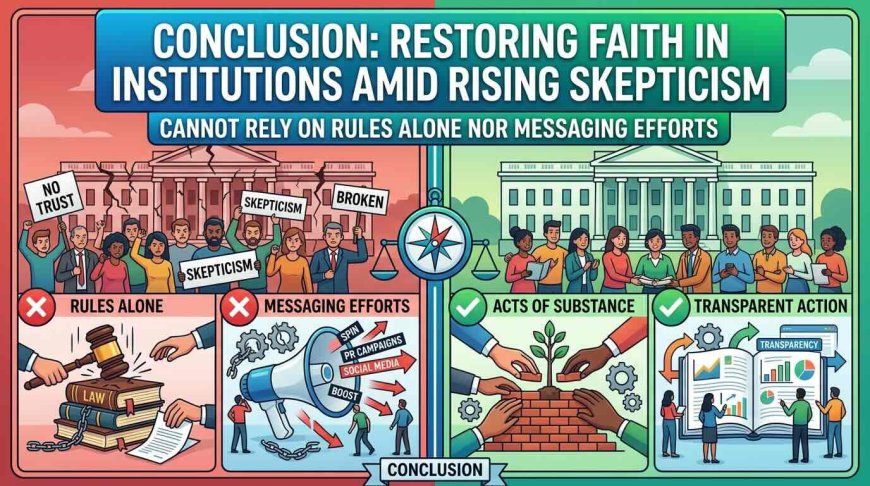
Restoring trust requires more than compliance or public messaging. Leadership integrity is the most powerful driver of institutional credibility.
When leaders align actions with declared values and maintain transparent oversight, trust gradually returns. Collaboration between corporations and regulators further strengthens public confidence, particularly when governance evolves alongside technological innovation.
Ethical governance is not a checklist. It must be integrated into strategy, leadership evaluation, and institutional design. Organizations consistently aligning performance with responsibility create the conditions for sustainable trust.
In an era of corporate skepticism, credibility emerges from a simple principle: institutions earn trust when behavior consistently reflects the values they claim to uphold.
Contact: report@probitasreport.com
Stay informed and ahead of the curve! Follow The Probitas Report on WhatsApp for real-time updates, breaking news, and exclusive content especially on integrity in business and financial fraud reporting. Don’t miss any headlines, connect with us on social media @probitasreport and visit www.probitasreport.com WhatsApp Only: +234 902 148 8737
[©2026 ProbitasReport - All Rights Reserved. Reproduction or redistribution requires explicit permission.]
ADVERTISEMENT:
What's Your Reaction?