






























































The Silent Economic Killer Stealing Nigeria's Future: How Banking Reform and NPL Reduction Can Unlock Economic Growth
Non-performing loans have become one of Nigeria's most significant yet overlooked economic challenges. This in-depth analysis examines the causes of rising NPLs, their impact on businesses, banking stability, and GDP growth, while exploring proven reforms—from Singapore's banking model to debt recovery modernization—that could unlock billions in productive lending and accelerate Nigeria's economic transformation.


ECONOMICS & BANKING REFORM


Nigeria's battle against non-performing loans is not merely a banking challenge - it is a national economic imperative that will determine whether the country can unlock growth, create jobs, and achieve its aspiration of becoming a globally competitive economy.
By Femi Coker
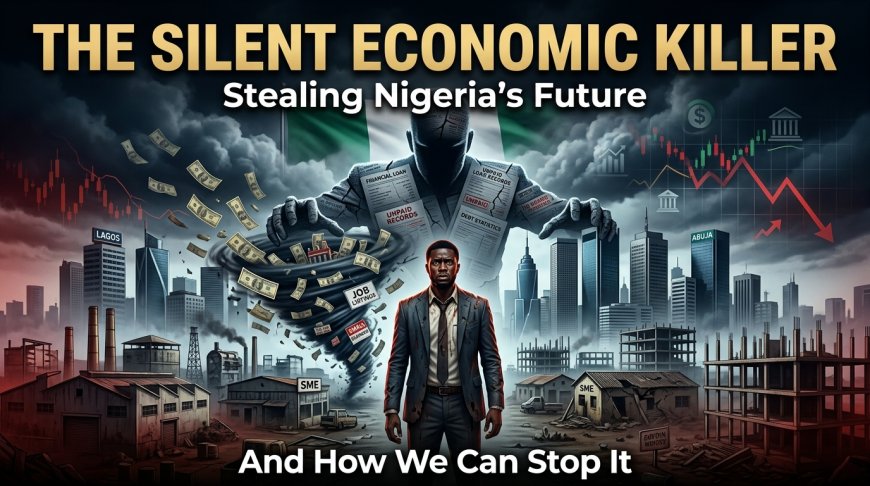
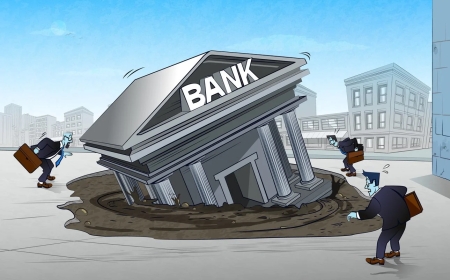
Let's talk about a crisis that doesn't make the front pages. It doesn't announce itself with dramatic headlines the way oil price collapses or naira devaluations do. It operates quietly - in bank boardrooms, in credit portfolios, in the nervous silence between a loan officer and a borrower who has stopped picking up the phone. It is called non-performing loans, and right now, it is costing Nigeria trillions of naira and millions of jobs every single year.
This is not an abstract banking technicality. This is a development emergency dressed in the language of finance. And if Nigeria is ever to move from the margins of the global economy to its centre - from a struggling nation to a competitive first-world powerhouse — then fixing this problem is not optional. It is the prerequisite for everything else.
What Exactly Is a Non-Performing Loan?
Before we go further, let's make sure we're speaking the same language. A non-performing loan (NPL) is any bank loan on which the borrower has stopped making scheduled payments, typically for 90 days or more, or where full repayment is considered unlikely. It is, in plain terms, a bad loan. Money lent that is not coming back on schedule.
When a loan goes non-performing, the bank is required to set aside capital reserves to cover the potential loss. That reserved capital is money that cannot be lent to another business, another entrepreneur, or another farmer. It sits frozen economically sterile, while the rest of the economy is starved of the credit it needs to grow.
Multiply that scenario by millions of loans across the entire Nigerian banking sector, and you begin to understand the scale of the problem we are dealing with.
Nigeria's NPL Crisis: The Numbers Behind the Story
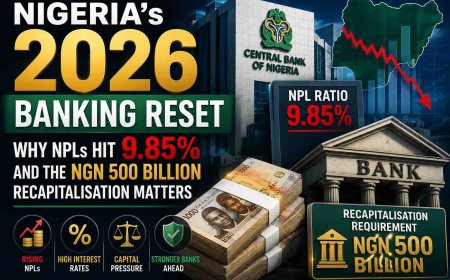
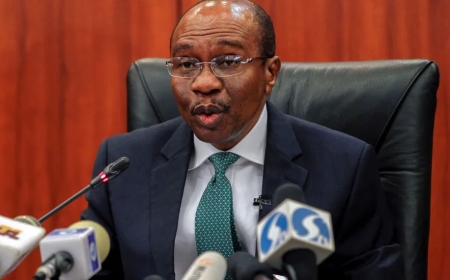
The numbers, when you look at them honestly, are alarming. According to the Central Bank of Nigeria's macroeconomic outlook, the sector's Nigeria NPL ratio climbed to approximately 7% following the withdrawal of regulatory forbearance extended to banks during the COVID-19 pandemic which was far exceeding the CBN's prudential limit of 5%. More recently, the CBN's January 2026 Economic Report showed the industry NPL ratio had risen further to 8.03%, prompting the regulator to impose restrictions on dividend payments, executive bonuses, and offshore investments for affected banks.
Even before this spike, cracks were visible. By April 2025, at least 11 commercial banks had breached the 5% regulatory threshold, up from just six banks a year prior. At the same time, S&P Global analysts warned that elevated credit losses were expected to persist in 2025, driven by currency depreciation, with foreign currency loans making up roughly half of banks' total loan books on average.
The causes are not mysterious. High interest rates, persistent inflation, foreign exchange volatility, and weak household incomes are crushing borrowers' capacity to repay. Small businesses are squeezed between high energy costs and anaemic consumer demand. Larger corporates are battered by the weak naira. Regular Nigerians are watching their loan repayment capacity erode as real incomes fall. The loan default crisis is systemic, and it feeds on itself.
"When banks lose money on bad loans, they raise interest rates to compensate, tighten credit standards, and reject the very businesses and entrepreneurs that could power Nigeria's growth."
MORE READ:
- The Cost of Distrust: How Nigeria's Credit Culture Is Killing SME Growth and Economic Development
- 5 Corporate Governance Failures That Cost African Companies Billions - And How to Avoid Them
- Why Africa’s Richest Nations Have Weak Currencies - What Nigeria Must Do Before 2027
- Nigeria - DRC Private Sector Partnership: A New Path for African Industrialisation and Economic Sovereignty

The Real Economic Impact of Non-Performing Loans
Here is where the story becomes deeply personal for every Nigerian, whether they have ever set foot in a bank or not. The economic impact of non-performing loans reaches far beyond balance sheets and boardrooms.
Higher Borrowing Costs for Everyone
As NPLs rise, banks build risk premiums into their lending rates. The result is a credit market where interest rates are prohibitively high for the very businesses that need finance most. SME financing in Nigeria is already deeply constrained - small and medium enterprises form the backbone of any thriving economy and generate 7 out of 10 formal jobs globally, yet Nigerian banks remain cautious lenders to this sector, citing perceived risks that are themselves partly a product of poor credit infrastructure.
A Chilling Effect on Productive Lending
Research has shown that when banks tighten credit standards in response to rising NPLs, Nigerians in high-risk industries find it significantly harder to access credit in Nigeria. A banking sector that can't safely lend is a banking sector that can't fulfil its most fundamental role in the economy.
Slower GDP Growth
Academic research published in 2025 confirms that business loans have a statistically significant positive effect on Nigeria's GDP, while high lending rates suppress economic activity. Every percentage point of unnecessary credit cost is a drag on aggregate growth. For a country that needs to create millions of jobs annually for its youth population, this is not just an economic statistic, it is a human catastrophe playing out in slow motion.
Undermined Financial Inclusion
By end-2024, over 120 fintech firms were active in Nigeria, collectively attracting more than $1 billion in funding. But high default rates create structural challenges for this entire ecosystem, weakening lender profitability and threatening the digital finance revolution that could be transformative for financial inclusion and economic growth in Nigeria.

The Singapore Benchmark: What World-Class Banking Governance Looks Like
To understand how far Nigeria has to travel and how achievable the journey is, look at Singapore. In 1965, Singapore was a newly independent city-state with no natural resources, no agricultural hinterland, and no oil. What it had was an extraordinary commitment to governance, institutional discipline, and long-term economic strategy.
Today, the Singapore banking system is one of the most stable and respected in the world. The country's NPL ratio has remained consistently at or below 1.2%, and Moody's projects that Singapore's problem loan ratios will remain at just 1% to 2% through 2025, underpinned by robust credit reserves and prudent risk management. The MAS 2025 Financial Stability Review reported that housing loan NPLs sat at a remarkable 0.3%.
The difference between Nigeria and Singapore is not natural resources. Nigeria vastly exceeds Singapore in oil, gas, arable land, minerals, and a workforce of over 200 million people, the largest in Africa. The difference is financial system governance: the quality of institutions, the rule of law, the culture of creditworthiness, and the sophistication of debt recovery mechanisms.
MORE NEWS:
- Lagos International Financial Centre: Nigeria’s New Economic Blueprint
- How Corporate Governance Drives the Survival and Growth of Emerging Enterprises
- Why Strong Corporate Governance Is the Secret to African Business Survival
- Digital Governance in Nigeria, Why Corporate Boards Must Treat AI, Cybersecurity and Data Ethics as Fiduciary Duties
Nigeria vs Singapore: A Side-by-Side Reality Check
The following comparison illustrates the gap - and the opportunity - in clear terms:
|
Indicator |
Nigeria (2025–2026) |
Singapore (2024–2025) |
What This Means |
|
NPL Ratio |
8.03% (Jan 2026) |
~1.2% |
Nigeria's bad loan burden is nearly 7× that of Singapore |
|
Regulatory Threshold |
5% (currently breached) |
No fixed threshold - market discipline prevails |
Singapore operates below its own norms; Nigeria struggles above its limits |
|
Bank Capital Adequacy Ratio |
11.6% (above 10% minimum) |
15.1%-17.1% (big 3 banks) |
Singapore banks carry significantly stronger capital buffers |
|
Credit Culture |
Developing; weak credit bureau integration |
Strong; deep credit history infrastructure |
Credit history is economic capital in Singapore not yet in Nigeria |
|
Debt Recovery Framework |
Fragmented; no Central Asset Registry |
Sophisticated; integrated legal and ADR infrastructure |
Nigeria lacks the infrastructure for efficient debt recovery |
|
Judicial Efficiency |
Slow; court backlogs persist |
Highly efficient; specialised commercial courts |
Slow courts make loan recovery expensive and unlikely |
|
Financial Literacy |
Low; limited formal programmes |
High; embedded in national education strategy |
Financial literacy in Nigeria is under-invested relative to its economic role |
|
Digital Banking Penetration |
Growing rapidly; 120+ active fintechs |
98% of corporate transactions conducted digitally |
Nigeria's fintech base is a foundation to build on, not a finished structure |
Sources: CBN Economic Report January 2026; MAS Financial Stability Review 2025; Moody's Singapore Banking Outlook 2025; BusinessDay Nigeria; WifaTalents Singapore Banking Statistics.
What's Broken in Nigeria's Debt Recovery System
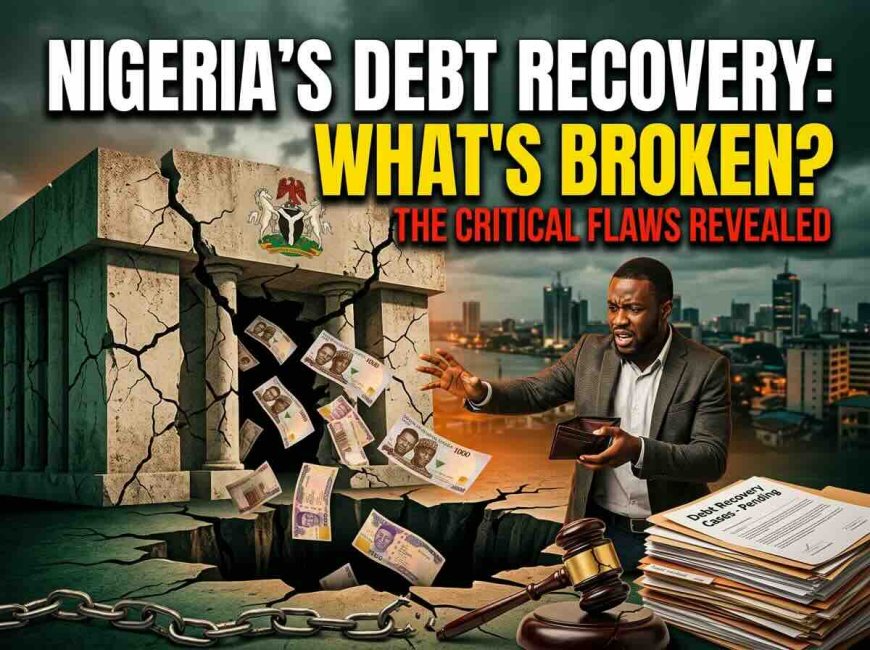
To fix the NPL problem, you must first understand why debt recovery in Nigeria is so difficult. Several structural failures compound each other.
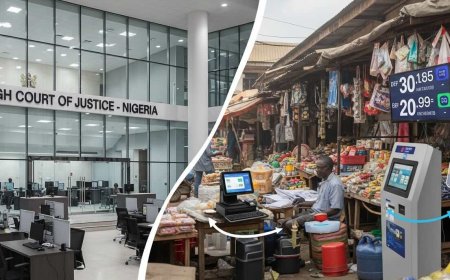
First and most fundamental: Nigeria does not yet have a functioning Central Asset Registry. When a borrower defaults, lenders lack an efficient mechanism to trace, identify, and enforce claims against assets. No registry means no efficient recovery. No efficient recovery means banks build higher risk premiums into pricing. The cycle is self-perpetuating.
Second, litigation has traditionally been the default approach to debt collection, rather than the last resort it should be. Going to court in Nigeria is expensive, slow, and uncertain. For many NPL cases, especially where borrowers face genuine financial hardship as litigation compounds losses rather than recovering them.
Third, some debtors are defaulting not because of bad faith but because of genuine economic distress, the kind produced by years of high inflation, energy price shocks, and foreign exchange instability. Treating them the same as willful defaulters is both unjust and economically counterproductive.
The Reform Agenda: What Actually Works
1. Alternative Dispute Resolution: The Smarter First Step
Nigerian law already supports the use of Alternative Dispute Resolution for debt recovery, and it is the most underutilised tool in the arsenal. ADR that encompasses negotiation, mediation, and arbitration offers faster, cheaper, and more relationship-preserving outcomes than court litigation in the vast majority of NPL cases. Best practice is clear: issue a formal Letter of Demand, then move to structured negotiation or mediation. Litigation should be a genuine last resort, not a first instinct.
2. The FCCPC's DEON Regulations: A Step-Change in Ethical Standards
One of the most significant developments in Nigeria's credit landscape is the FCCPC's DEON Consumer Lending Regulations 2025, which came into effect on July 21, 2025. These landmark rules represent a decisive shift toward ethical debt recovery practices in Nigeria's digital credit market.
Under the DEON Regulations, lenders are now required to fully disclose all loan terms before transactions are completed. Automatic or pre-approved lending without borrower consent is prohibited. Consumer complaints must be resolved within 24 to 48 hours. Abusive or harassing debt collection tactics now carry real legal liability. By levelling the regulatory playing field between banks and unregulated digital lenders, the FCCPC has created conditions for a more transparent and stable credit market.
3. Financial Literacy: The Underinvested Infrastructure
A reform that rarely features in high-level policy discussions but deserves to be at the top of the agenda: financial literacy in Nigeria is chronically under-resourced relative to its economic importance. Research consistently shows that a significant proportion of loan defaults stem not from willful evasion but from a genuine inability to manage personal and business finances. Financial literacy is not a soft social programme — it is hard economic infrastructure.
4. Building a Central Asset Registry: The Missing Cornerstone
The creation of a comprehensive, nationally integrated Central Asset Registry Nigeria is arguably the single most impactful structural reform available right now. An asset registry covering land, property, vehicles, equipment, and other major asset classes would dramatically reduce the cost and uncertainty of debt recovery, lower risk premiums in lending rates, and increase banks' willingness to extend credit. The CBN has already signalled seriousness by strengthening the Global Standing Instruction (GSI) framework. A Central Asset Registry is the next, larger step.
5. Judicial Reform and Specialised Debt Recovery Tribunals
Judicial reform and debt recovery are inseparable. Where commercial disputes take years to resolve, credit risk rises, lending rates rise, and credit availability shrinks. Fast-track commercial courts and specialised debt recovery tribunals that are insulated from the general court backlog can dramatically change the recovery economics for Nigerian banks and, in turn, the pricing economics for Nigerian borrowers.

The Economic Dividend: What Recovery Unlocks
It is worth being explicit about what is at stake if Nigeria gets this right. If Nigeria were to reduce its NPL ratio from its current 8% toward 2–3% over a sustained reform period, the economic dividends would be transformative:
|
8.03% Nigeria NPL ratio (Jan 2026) |
1.2% Singapore NPL ratio (2023–2024) |
11 Nigerian banks above NPL limit (Apr 2025) |
5% CBN prudential NPL ceiling (being breached) |
Unlocked lending capital. Capital reserves held against non-performing loans would be released back into productive lending, directly available to finance SMEs, infrastructure, agriculture, and manufacturing.
Lower interest rates. As risk premiums fall, lending rates could contract meaningfully. Academic research has shown that high lending rates reduce economic growth significantly - a reversal of this dynamic would stimulate business investment across every sector.
Greater access to credit. Reducing lending rates and implementing financial inclusion strategies are among the most important policy interventions available to enhance SME contributions to national development and reduce unemployment.
Building a Credit Culture That Supports Economic Growth
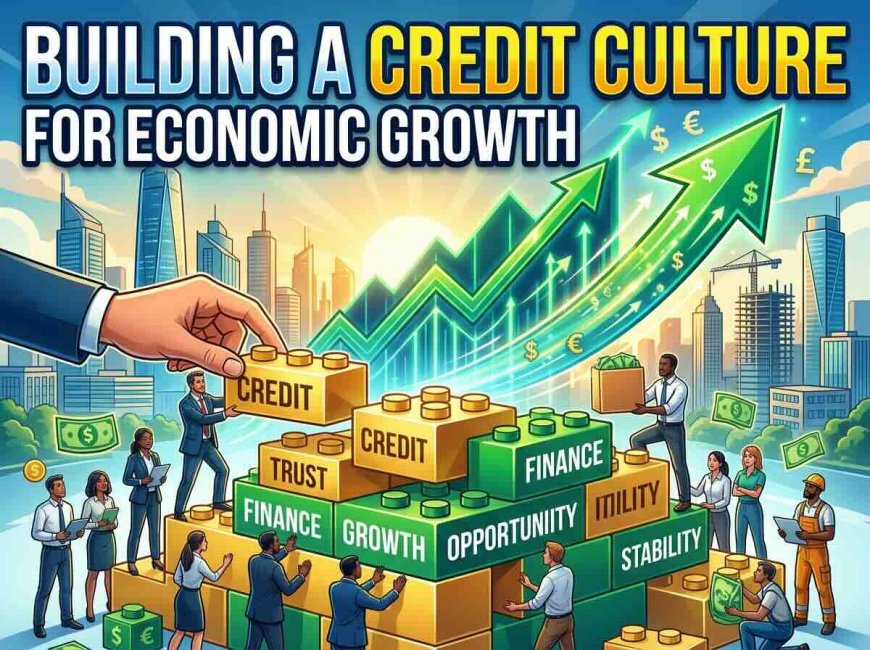
Ultimately, the deepest and most durable solution to the NPL crisis is cultural as much as it is institutional. Credit culture and economic growth are bound together. In economies where repaying debt is a matter of professional reputation and social standing where creditworthiness is a genuine form of economic capital in which default rates are structurally lower, credit is more available, and growth is faster.
Credit risk management in this context is not just a technical function within a bank. It is a national economic strategy. Done poorly, it produces the NPL crisis we see today. Done well, it becomes the engine of inclusive development. Building this culture requires consistent regulatory enforcement, transparent credit bureau systems, financial literacy programmes, and banking sector reforms that are not merely transactional but transformational.
A Call to Action: Every Stakeholder Has a Role
The NPL crisis will not be solved by regulators alone, or by banks alone, or by government alone. It demands a coordinated response across every layer of Nigerian society.
Policymakers: Enforce the 5% NPL ceiling with real consequences. Mandate ADR before litigation. Prioritise the Central Asset Registry. Fund financial literacy as national infrastructure.
Policymakers: Enforce the 5% NPL ceiling with real consequences. Mandate ADR before litigation. Prioritise the Central Asset Registry. Fund financial literacy as national infrastructure. Address the inflation and FX volatility that drives defaults at the source.
Bankers & Lenders: Adopt forward-looking credit risk provisioning. Invest in borrower financial education before loans are approved, not just after they go bad. Build ethical, professional debt collection standards as a business imperative, not just a compliance exercise.
Business Owners: Build and protect your creditworthiness. Honour your loan commitments. Separate business and personal finances. Demand transparent lending terms. Your repayment record is a long-term strategic asset.
Citizens: Invest in your own financial literacy. Borrow responsibly and only for productive purposes. Hold banks accountable for ethical practices. Understand that credit availability or its absence affects your livelihood directly.

The Bigger Picture: From Third-World to First-World
Singapore's journey from a resource-poor developing nation to one of the world's most prosperous economies was the product of deliberate, disciplined, sustained commitment to building the institutions and infrastructure that make economic growth possible. A sound banking system with low NPLs was one of the foundations, not an afterthought.
Nigeria's ambition to become a first-world economy is not unrealistic. The human capital is here. The entrepreneurial energy is here. The natural resources are here. What is needed is the will to build the institutional foundations that make that ambition achievable - and fixing the NPL crisis is where that work begins.
Non-performing loans are stealing Nigeria's future. We have the solution. Singapore proved it works. The blueprint exists. The technology exists. The expertise exists. What we need is political will and collective action.
About the Author
Femi Coker is a business strategist and banking expert with over 20 years of experience advising banks, governments, and multinational corporations across Africa. He writes on economic development, financial system reform, and Africa's path to global competitiveness.

About Avanoo Capital Limited
Avanoo Capital Limited is a money lending, financial advisory, and strategic investment firm focused on creating sustainable value across Africa's emerging markets. The company specializes in investment facilitation, project financing, alternative financing, energy banking, and capital-raising solutions for governments, corporations, SMEs, and high-growth enterprises across Africa.
Leveraging deep market expertise, strategic partnerships, and a results-driven approach, Avanoo Capital helps clients unlock opportunities, optimize assets, mitigate risks, and achieve long-term growth. Committed to innovation, integrity, and economic transformation, Avanoo Capital Limited serves as a trusted advisory partner for investors and organizations seeking to drive impactful investments and sustainable business development across Africa. WhatsApp Only: +234 902 505 0410

Contact: report@probitasreport.com
Stay informed and ahead of the curve! Follow The Probitas Report on WhatsApp for real-time updates, breaking news, and exclusive content especially on integrity in business and financial fraud reporting. Don’t miss any headlines, connect with us on social media @probitasreport and visit www.probitasreport.com WhatsApp Only: +234 902 148 8737
[©2026 ProbitasReport - All Rights Reserved. Reproduction or redistribution requires explicit permission.]
What's Your Reaction?