























































Protecting Africa's Mineral Value Chain Through Beneficiation Governance and Recovery Assurance
Protecting Africa's Mineral Value Chain Through Beneficiation Governance and Recovery Assurance examines how Africa can move beyond raw-mineral exports toward a secure, transparent and value-retaining mineral economy. It highlights beneficiation governance as essential for protecting mineral projects from investment and extraction through processing, manufacturing and revenue collection, while addressing fraud, corruption, weak contracts, financial leakage and inadequate due diligence. Recovery assurance complements this by identifying financial exposures, detecting defaults, investigating value leakage, tracing assets and strengthening systems for sustainable value protection, accountability and institutional integrity.

PROBITAS REPORT | POLICY & GOVERNANCE INTELLIGENCE


AFRICA’S CRITICAL MINERALS MOMENT: AMSG, BENEFICIATION, COGNITIVE GOVERNANCE, AND THE BATTLE FOR VALUE-CHAIN OWNERSHIP
How Africa Can Move from Mineral Extraction to Industrial Transformation
The Africa Minerals Strategy Group (AMSG) & The Beneficiation Agenda – Ending 500 Years of Raw Export
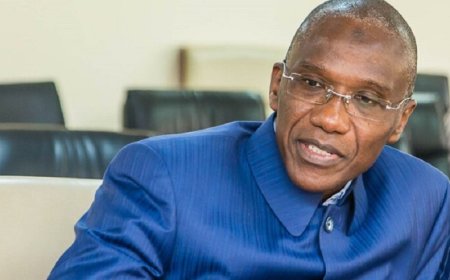
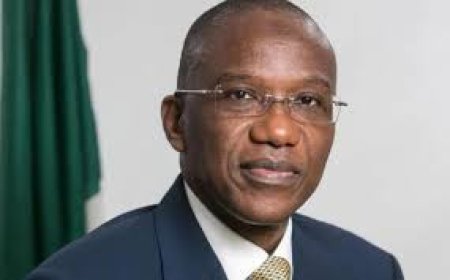
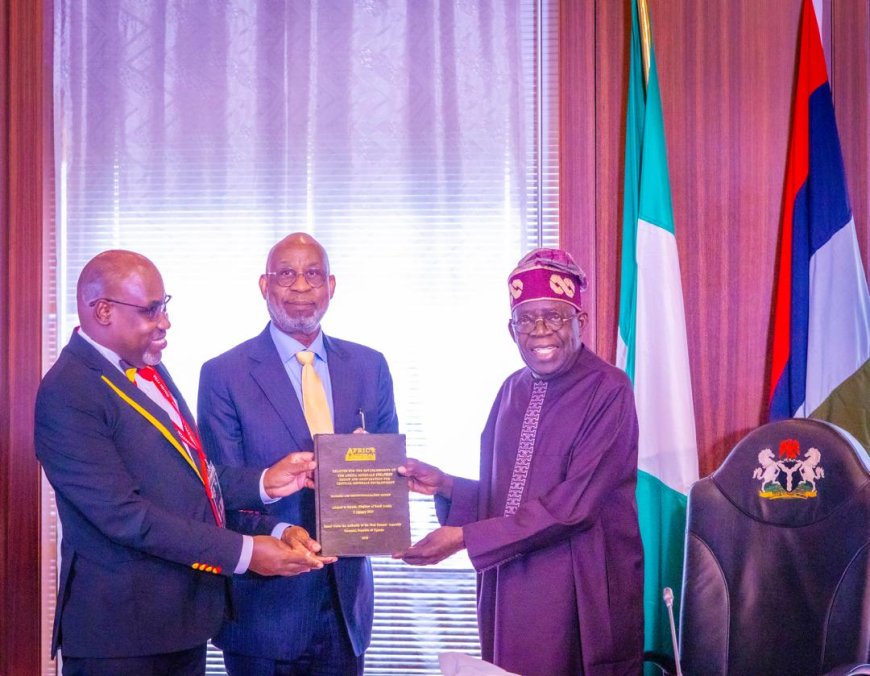
For over 500 years, Africa has been locked into a colonial economic architecture defined by a simple, extractive rhythm: dig, ship raw, buy back finished. Today, the continent possesses around 30 percent of the world's critical minerals reserves (IEA, 2024; OilPrice.com, 2024) such as 55 percent of the world’s cobalt, 47.65 percent of manganese, 21.6 percent of natural graphite, 5.9 percent of copper, and 5.6 percent of nickel (Financial Express, 2024). However, Africa has less than five percent of the value of the end-products. This is an indication that the continent produces raw materials for the manufacture of batteries, electric vehicles, and renewable energy technologies, and the rest of the world profits from its resources. Further, the International Energy Agency predicts that demand for lithium will rise fivefold by 2040, but, unless there are immediate interventions, Africa will continue to be the supplier of raw materials to other parts of the world that are industrializing. The establishment of the Africa Minerals Strategy Group (AMSG) marks the first sovereign, ministerial attempt to break this cycle. Re-elected in January 2026 under Chairman Dr. Dele Alake, Nigeria's Minister of Solid Minerals Development, and led by Secretary-General H.E. Moses Micheal Engadu, the AMSG is not another study group or policy forum. It is a continental bloc with a clear mandate: to promote exploration, extraction, production, local beneficiation, and commercialization; to ensure a sustainable, transparent, and secure supply of critical minerals; and to improve the quality of life of the African population. This policy paper analyzes the AMSG beneficiation agenda, its five strategic pillars, its alignment with the African Mining Vision, and its profound convergence with what we term Kingdom Economics—a framework of stewardship, sovereignty, and wealth retention developed at The Cyrus Partners Priesthood. The question before the continent is no longer whether the minerals exist. The question is whether Africa has the wisdom, institutions, capital, skills, technology, integrity, governance, and courage to build. The mineral is there, the strategy is there, and the issue is who owns the value chain.

I. What is the Africa Minerals Strategy Group (AMSG)? A Sovereign Corrective
The Africa Minerals Strategy Group (AMSG) was constituted at the sidelines of the Future Minerals Forum (FMF) 2024 as the continental ministerial level forum of African Ministers of Mines that resolved to take collective action to extract maximum value-added benefits from Africa’s vast mineral resources base. AMSG first ever Chairman, Dr Dele Alake was re-elected at the 2026 Annual General Meeting.
Four identity markers distinguish AMSG from previous initiatives:
1. Emphasis is on sovereignty rather than donor conditionality: unlike similar critical minerals partnerships initiated by the US, EU, or China, which tend to position Africa as a mere supplier of strategic materials for their own clean energy transition goals, the AMSG is Africa-driven and has a well-articulated mission statement as captured in its ministerial communiqué: “To promote exploration, extraction, production, local beneficiation, and commercialization to ensure a sustainable, transparent, and secure supply of critical minerals while promoting environmental sustainability and improving the quality of life of our population.
2. Collective bargaining: previously, individual African countries have been negotiating with international mining firms on a country basis and, in the process, have been compromised on critical revenue-raising terms such as royalties, tax holidays, and export tariffs. AMSG creates a continental cartel of knowledge and standards, similar to OPEC's early logic, but focused on value addition rather than supply restriction.
3. Critical Minerals Focus for Future Economy: While Africa has historically been defined by gold and diamonds, AMSG focuses on energy transition minerals—lithium, cobalt, graphite, manganese, rare earths, and platinum group metals. This is strategic. Africa provides with about 30% of the world’s critical minerals, with the DRC alone accounting for about 70% of global cobalt primary production.
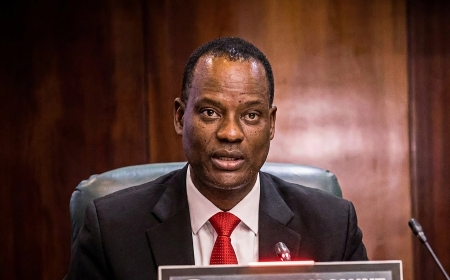
4. Institutional capacity: In line with reinforcing institutional mechanisms, the AMSG resolution provided for the recruitment of a vice chairman, a deputy secretary general, and a financial secretary. Under Engadu's leadership, the group is spearheading initiatives to deepen Africa's geological knowledge base and institutionalize responsible sourcing.
II. The Beneficiation Policy: The Heart of the Economic War
Beneficiation is the economic and industrial process of adding value to raw minerals within the country of origin before export. The AMSG's Mineral Value Addition Initiative will facilitate the development of local skills, supply chains, and industries that add value to these minerals. By focusing on local beneficiation, AMSG aims to ensure that Africa receives a fair share of the economic benefits.
The Old Model – The Colonial Extraction Equation:
1. Extract: Multinational digs raw spodumene (lithium ore) at $400/ton in Zimbabwe or DRC.
2. Export: Raw ore shipped to China, which has cornered bulk of the processing capacity.
3. Process: Refined to lithium hydroxide ($25,000/ton) and manufactured into battery cells in Asia.
4. Import: Africa imports electric buses, solar batteries, and phones at 100x markup.
5. Result: Africa retains 1-5% of value chain; 95% of jobs, technology transfer and industrialization happen elsewhere.
This is the Resource Curse in numbers. Africa holds more than half the world's cobalt reserves, yet the DRC, which produces 70% of global cobalt, earns less from cobalt than a single battery manufacturer earns from margin.

The AMSG Beneficiation Model – The Sovereign Value Equation:
2. Industrial Zones: Special Economic Zones (SEZs) will be established to allow the beneficiation of mining products with reduced costs.
3. Technology Transfer Clause: Technology transfer agreements are required in addition to offtake agreements by which African miners and smelters sell their production to foreign buyers under favorable terms.
4. Value Retention Target: AFRICA50 aims to capture 40-60% or more of the value chain downstream from mining in order to foster technology development, particularly in the fields of green energy, electronics and sophisticated manufacturing.
5. Result: Jobs, industrialization, infrastructure, and wealth stay on continent.
III. Five Strategic Pillars of AMSG Beneficiation – A Policy Deconstruction
Pillar 1: Local Content and Skills Sovereignty
Policy Action: Mandating mining companies hire locally and source supplies locally. This reduces capital leakage and builds SMEs. The AMSG roundtable stressed the need for African-led exploration and beneficiation, noting that some countries are progressing while others are being left behind.
Pillar 2: Export Restrictions on Unprocessed Ores
Policy Action: Banning or taxing export of unprocessed raw ores. Zimbabwe banned raw lithium exports in 2022, Namibia and Ghana have followed. AMSG provides continental political cover for such sovereign decisions, preventing investors from playing one nation against another.
Pillar 3: Infrastructure Corridors for Value Chains
Policy Action: Building power, rail, and ports specifically for value-chain logistics. Beneficiation is power-intensive. You cannot refine lithium without 24/7 power. AMSG links beneficiation to AfCFTA and infrastructure funds, arguing critical mineral beneficiation needs sound infrastructure support.
Pillar 4: Sovereign Equity and Financial Innovation
Policy Action: Governments retaining ownership stakes. Secretary-General Engadu underscored the role of sovereign wealth funds, national mining companies and pension funds in bridging Africa's financing gap. This is crucial. Building a lithium refinery costs $300m-$1bn. Africa must finance beneficiation itself via pension funds and sovereign funds, not predatory debt.
Pillar 5: ESG as Stewardship, Not as Weapon
Policy Action: Enforcing high standards to prevent exploitation and ecological damage. The AMSG mandate includes protecting the environment. However, AMSG reframes ESG from a Western compliance tool used to block African industrialization, to an African stewardship tool to protect communities and land.
IV. The Global Context: Why Beneficiation is Now Non-Negotiable
Three global shifts make AMSG urgent:
First, China's Processing Dominance: China controls 60-80% of critical mineral processing. Recent curbs on critical mineral trade by China have galvanized major economies to secure supplies. If Africa does not beneficiate, it will simply swap dependence on Europe for dependence on China.
Second, The US and EU Critical Minerals Race: Both have passed critical minerals strategies that list Africa as supplier. Without AMSG, Africa will sign 30-year off-take agreements that lock it into raw export.
Third, The Green Transition Super-Cycle: The world needs five times more lithium by 2040. Africa is home to sizable reserves. This is a once-in-a-century wealth transfer opportunity. As one analysis notes, Africa needs to build local value chains that integrate mining with refining and manufacturing.

V. The DRC Case: Mineral Power Without Complete Value-Chain Power
The Democratic Republic of Congo illustrates both Africa's strength and its vulnerability.
The IEA estimates that the DRC accounted for almost two-thirds of global cobalt mining in 2024, while China handled approximately three-quarters of cobalt refining.
This is the structural paradox. The country sits at one of the most strategically important points in the mineral economy. Yet much of the higher-value processing capacity lies elsewhere.
The lesson is:
Africa needs greater participation in the stages of the value chain where technology, processing, manufacturing, knowledge, and margins accumulate.
That is a more sophisticated objective than merely stopping exports.
VI. Alignment with Kingdom Economics: A Theological-Economic Convergence
As a Kingdom Economics, therefore, we discern four converging observations:
1. Stewardship of Creation (Gen. 2:15): God placed humanity in the garden that he might dress and keep it. So, to appropriate the resources is to bring out their God-given best. To sell the ore at $400 and buying it back at $25,000 is not stewardship but desecration; it is turning Africa into a quarry, not a garden for God.
2. Economic Sovereignty (Deut. 8:18): The power to produce is a divine endowment. By retaining 40-60% of the value chain, African nations gain fiscal capacity to fund education, healthcare, and kingdom expansion without dependency on foreign aid that often comes with ideological strings. This breaks Deuteronomy 28:44—"He "shall lend to you, and you shall not lend to him."
3. Resistance to Neo-Colonial Control: The global mineral order seeks to keep the Global South as raw supplier while the North controls technology and finance. Beneficiation is economic resistance. It refuses the assigned role of supplier and claims role of industrial partner. This aligns with exceptionalism—we lead, we do not follow.
4. Human Dignity and Work (2 Thessalonians 3:10): Refineries are producing chemists, metallurgists, and technicians in addition to artisanal diggers, elevating the dignity of African workers.

VII. Strategic Opportunities for Church, Capital, and State
For the State: AMSG needs a continent-wide critical minerals strategy, noting that while other regions have such frameworks, Africa still does not. National policy must align mining codes, energy policy, and industrial policy.
For Believers with Capital – Kingdom Industrial Partnerships: Invest in local processing plants, battery assembly, and graphite anode plants aligned with AMSG goals. This is seed investment with high Kingdom ROI. A lithium hydroxide plant in Nasarawa, a graphite processing hub in Tanzania – these are 21st-century Joseph granaries.
For Education: The beneficiation agenda needs 100,000 engineers. Christian universities and KREENO's educational arms must pivot to metallurgy, battery chemistry, and mining law. Skills ministries must train technicians.
For Ethics: Church must champion fair labor and environmental care in mining zones, ensuring beneficiation does not become internal exploitation. Kingdom business must be different.
VIII. Challenges, Watchpoints, and Policy Recommendations
1. Corruption Risk: Increased state equity can lead to graft. Recommendation: Mandate EITI++ transparency, blockchain-based royalty tracking, and independent beneficiation audits published by AMSG.
2. Capital Intensity and Debt Trap: Building refineries requires massive capital investments. Recommendation: AMSG Sovereign Beneficiation Fund – 0.5% levy on raw exports pooled into African Development Bank-managed fund, blended with pension funds, as Engadu suggested.
3. Infrastructure Deficit: Power and transport deficits can stall beneficiation. Recommendation: Link AMSG to AfCFTA Industrial Corridors—Lobito Corridor for DRC copper/cobalt, Walvis Bay Corridor for Namibian lithium.
4. Global Pushback: Western and Eastern powers may resist losing cheap access. Recommendation: Unified AMSG negotiation template—no raw export license without 30% local processing commitment, technology transfer, and 10% sovereign equity.
The Probitas Verdict
The Africa Minerals Strategy Group represents an important development in the continuing effort to reposition Africa's mineral economy, yet its greatest potential lies not in another policy declaration but in whether Africa can convert coordination into execution. The continent has issued many declarations throughout its history, but the challenge has always been implementation, and AMSG therefore faces a historic test. The question before the continent is whether Africa can explore better, extract responsibly, process locally, build industries, finance strategically, transfer technology, protect communities, govern transparently, retain value, and create intergenerational wealth. If the answer is yes, then critical minerals could become more than another commodity cycle; they could become the foundation of a new African industrial era.
But there is an important warning. Africa must not replace foreign extraction with domestic extraction without changing the underlying economics. The objective is not merely to change who digs the hole; the objective is to change what the hole produces for the African economy. The continent must move from extraction to beneficiation, from beneficiation to manufacturing, from manufacturing to innovation, from innovation to intellectual property, and from intellectual property to global competitiveness. That is the real value chain, and that is where Africa's economic sovereignty will ultimately be tested.
The biblical principle remains compelling: "The wealth of the sinner is laid up for the just." (Proverbs 13:22). But wealth does not become productive merely because it changes hands. It requires wisdom. It requires institutions. It requires capital. It requires skills. It requires technology. It requires integrity in business mentality. It requires cognitive governance. And it requires the courage to build.
For Africa, therefore, the critical-minerals opportunity presents a question that is simultaneously economic, political, industrial, and moral: Will Africa continue to be the quarry of the world—or become one of the world's great industrial workshops? The mineral is already in the ground. The strategic opportunity is already before the continent. The decisive issue is ownership of the value chain.
Probitas Policy Principle
Do not export what you can transform. Do not transform what you cannot own. And do not own what you cannot govern. Africa's mineral future must therefore be built on three foundations: value addition, capital ownership, and institutional integrity. That is the pathway from natural-resource abundance to sustainable prosperity. That is the beneficiation agenda. And that is why the rise of AMSG deserves the attention of policymakers, investors, banks, universities, entrepreneurs, and the Church.

About the Author
Dr. Ohio O. Ojeagbase is a private investigator, financial strategist, debt-recovery specialist, corporate governance practitioner, researcher, and publisher. He is the Founder and Chief Private Investigator of KREENO Debt Recovery and Private Investigation Agency (Kreeno Consortium) and the Publisher of Probitas Report, an online integrity-in-business and financial intelligence platform.
His professional experience spans banking, debt recovery, private investigation, asset tracing, business turnaround, enterprise risk management, financial consulting, fraud prevention, and corporate governance. His career began in Nigeria's banking sector, including service as a Credit and Consumer Banking Team Leader at Access Bank Plc.
Dr. Ojeagbase holds a first degree in Industrial Chemistry from the University of Benin and an MBA in General Management from the University of Lagos. His academic work has also included doctoral research in Private Investigation and Governance at Triune Biblical University Global Extension, (TBUGLEX), USA.
He is a Fellow of the Nigeria Institute of Credit Administration (FICA) and a Senior Fellow of the Institute of Debt Recovery Practitioners of Nigeria (SFIDR). His work focuses particularly on credit risk management, non-performing loan recovery, financial intelligence, fraud prevention, investigative forensics, institutional transformation, and business integrity.
Through ProbitasReport, Dr. Ojeagbase advances research, commentary and public discourse on integrity in business, financial crime, corporate governance, debt recovery, economic transformation and institutional accountability. His professional philosophy centers on recovery with integrity, strengthening institutions, restoring trust, and creating sustainable value.
Contact: report@probitasreport.com
Stay informed and ahead of the curve! Follow The Probitas Report on WhatsApp for real-time updates, breaking news, and exclusive content especially on integrity in business and financial fraud reporting. Don’t miss any headlines; connect with us on social media @probitasreport and visit www.probitasreport.com WhatsApp Only: +234 902 148 8737
[©2026 ProbitasReport - All Rights Reserved. Reproduction or redistribution requires explicit permission.]
What's Your Reaction?