











































































Africa Trade Conference 2026: Transforming Dialogue into Decisive Action for Continental Trade Growth
Insights from the Africa Trade Conference (ATC) 2026 in Cape Town as Access Bank CEO Roosevelt Ogbonna and African leaders call for bold action to strengthen intra-African trade, deepen regional integration, and unlock the continent’s economic potential.
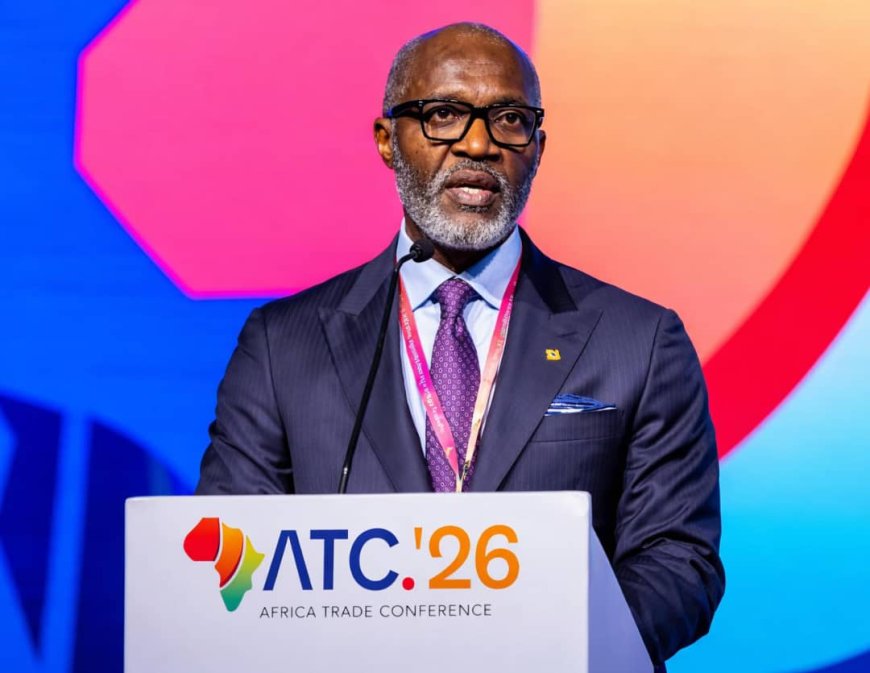

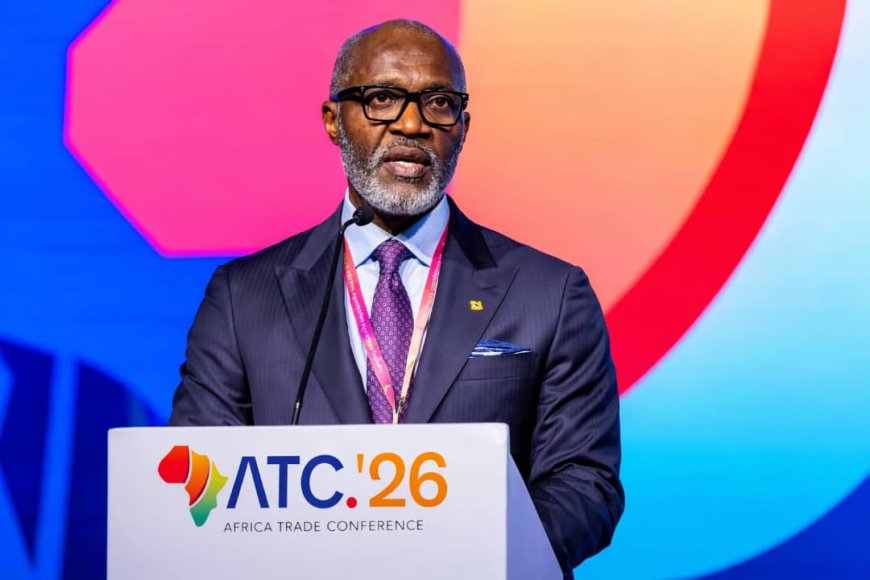
At the 2026 Africa Trade Conference in Cape Town, Access Bank Group CEO Mr. Roosevelt Ogbonna challenges African leaders, businesses, and policymakers to move beyond dialogue and embrace bold action capable of unlocking the continent’s vast trade potential.


A Continental Conversation That Must Produce Results
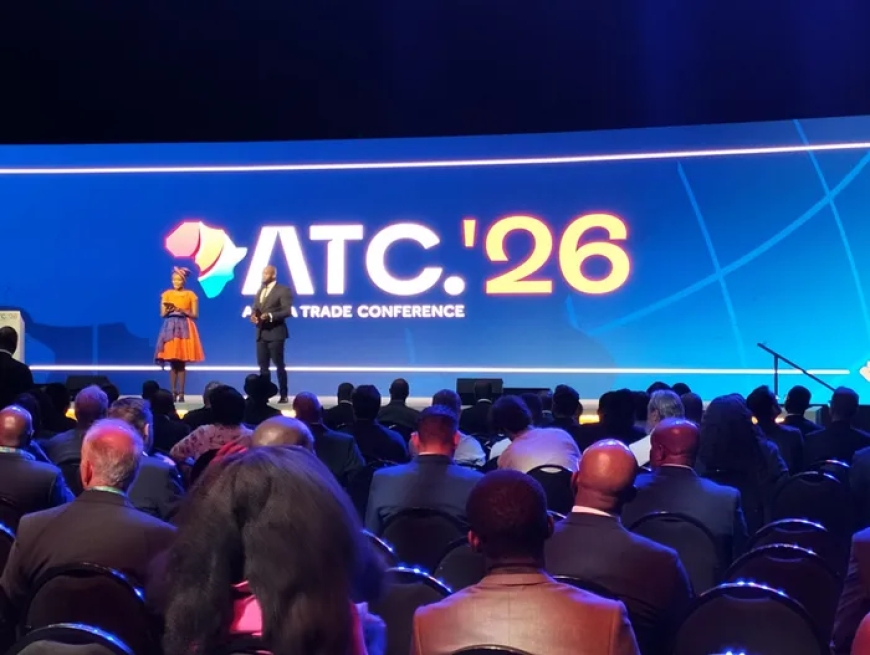
The recently concluded Africa Trade Conference (ATC) 2026 in Cape Town, South Africa, once again brought together some of the continent’s most influential business leaders, policymakers, development institutions, and financial actors to confront a critical question: How can Africa trade more effectively with itself and with the world?
The annual gathering has quickly evolved into one of the continent’s most consequential platforms for discussing Africa’s economic integration and trade transformation.
Delivering a keynote reflection during the conference, Mr. Roosevelt Ogbonna, Group Managing Director and Chief Executive Officer of Access Bank Plc, emphasized that the conference represents more than an annual meeting of stakeholders. For him, ATC represents a growing movement dedicated to reimagining Africa’s economic future through stronger intra-African trade and deeper regional collaboration.
Speaking before an audience of investors, policymakers, and entrepreneurs, Mr. Ogbonna expressed enthusiasm about the growing momentum behind the conference.

“We are really excited to see many of our friends and partners joining us here for the second Africa Trade Conference,” he said.
What began as an idea only a year ago has quickly matured into a strategic platform for shaping conversations around Africa’s trade architecture and the future of continental economic integration.
Yet beneath the optimism lies a sober recognition: Africa’s trade transformation will require much more than dialogue. It will require decisive and coordinated action.
Revisiting the Foundations of ATC 2025
Mr. Ogbonna reminded delegates that the conversations at ATC 2026 did not begin this year. They are a continuation of the candid discussions that took place during the inaugural Africa Trade Conference in 2025, where participants confronted uncomfortable truths about Africa’s economic structure.
At that gathering, leaders openly questioned why a continent with immense natural resources, a population exceeding 1.4 billion people, and some of the world’s fastest-growing economies still commands a relatively small share of global trade.
“We were brutally honest with ourselves,” Ogbonna told the audience. The conversation centered on a fundamental question:
How can Africa trade more effectively within itself while also strengthening its competitiveness in global markets?
For many participants, the answer lies in transforming the continent from a fragmented collection of markets into a more integrated economic ecosystem. Africa’s potential is undeniable. But unlocking it requires structural reforms, coordinated investment, and stronger partnerships between governments and the private sector.
Confronting Africa’s Structural Trade Barriers
Reflecting on the progress made since ATC 2025, Mr. Ogbonna described the experience as both encouraging and sobering. Encouraging because many businesses across the continent are increasingly positioning themselves for regional expansion. Sobering because the structural barriers limiting intra-African trade remain significant.
One of the most persistent challenges is the fragmentation of trade corridors across the continent. Despite ambitious frameworks such as the African Continental Free Trade Area (AfCFTA), the operational reality on the ground often tells a different story. In many instances, the idea of seamless cross-border trade remains more of a policy aspiration than an everyday business reality. Trade routes remain inefficient, customs processes slow, and logistics systems underdeveloped.
According to Mr. Ogbonna, countless African businesses proudly describe themselves as export-oriented enterprises. However, many still struggle to move beyond their domestic markets because the infrastructure and systems required to support cross-border trade remain incomplete. “These corridors are still fragmented,” he noted. Until these structural gaps are addressed, Africa’s trade ambitions will continue to face operational limitations.
Three Strategic Commitments for Africa’s Trade Future
At the end of ATC 2025, participants agreed on three practical commitments aimed at accelerating the transformation of Africa’s trade ecosystem.
These commitments have since become central pillars guiding the ongoing conversations at ATC.
1. Breaking Down Institutional Silos
The first commitment focused on dismantling the barriers that separate policymakers, financial institutions, and business leaders.
Historically, these three actors have often worked in isolation.
- Governments develop trade policies.
- Banks create financial products.
- Businesses attempt to navigate the resulting ecosystem.
But without coordination, even well-designed policies struggle to produce meaningful impact. Mr. Ogbonna emphasized that Africa’s trade transformation will require collaborative ecosystems where governments, financial institutions, and private enterprises co-design solutions together. Only through coordinated action can trade policies become operational realities.
2. Building a Data-Driven Trade Ecosystem
The second commitment centers on building a continental trade system powered by data, analytics, and reliable market intelligence. Across Africa, many businesses lack access to critical information required to expand into new markets. Questions about regulatory requirements, logistics costs, consumer demand, and payment systems often remain unanswered. Without these insights, entrepreneurs hesitate to take the risks required for cross-border expansion.
According to Mr. Ogbonna, Africa must build digital platforms capable of providing transparent and accessible market intelligence. Such platforms would empower businesses to make informed decisions and confidently explore new regional opportunities.
3. Creating an Inclusive Trade Ecosystem
The third commitment speaks directly to inclusivity. Africa’s trade ecosystem must not function solely for multinational corporations or large conglomerates. It must also support the ambitions of small and medium-sized enterprises, which form the backbone of most African economies.
“Ultimately, we want a system that works not just for the largest corporates but even for the smallest businesses that aspire to do business across Africa,” Mr. Ogbonna said.
If Africa is to build a truly integrated economic system, the benefits of trade must extend to entrepreneurs across every region and sector.
ATC 2026: A Continuation of Momentum
For Mr. Ogbonna, the second edition of the Africa Trade Conference represents progress rather than a reset. “2026 is not a restart,” he emphasized.
“It is a continuation of the conversations we had last year.” Encouragingly, early signs suggest that many of the ideas discussed at ATC 2025 are beginning to translate into practical initiatives such as: New partnerships are emerging., Regional investment collaborations are forming, and Technology platforms are gradually addressing long-standing barriers within Africa’s trade ecosystem. Yet much work remains ahead.
Signs of Progress Across the Continent
Several positive developments have begun to reshape Africa’s trade landscape.
- Regional value chains are emerging in sectors such as agriculture, manufacturing, and services, often driven by ambitious entrepreneurs and innovative companies.
- African brands are increasingly expanding beyond national borders, establishing presence across regional markets and competing internationally.
- Technology is also playing a transformative role.
Digital platforms are helping to reduce friction in several areas critical to trade, including:
-
Cross-border payment systems
-
Logistics coordination
-
Market access and digital marketplaces
These innovations are gradually bridging the operational gaps that have historically slowed the pace of intra-African commerce.
Persistent Challenges That Cannot Be Ignored
Despite these encouraging developments, Mr. Ogbonna cautioned that Africa’s trade progress remains uneven. Economic transformation is often concentrated in specific countries where policy reforms have advanced more rapidly. Similarly, trade activity frequently clusters around certain economic corridors, leaving many regions outside the mainstream of continental commerce.
“This concentration is not good enough,” he warned.
To truly transform Africa’s trade ecosystem, the benefits of economic integration must reach all corners of the continent.
Several structural challenges continue to impede progress:
-
Limited access to affordable finance for SMEs
-
Fragmented payment systems across African markets
-
Inadequate trade infrastructure and logistics networks
-
Lack of reliable market information for businesses
“These challenges are real,” Mr. Ogbonna acknowledged.
“But they will not stop us from driving the Africa trade that we desire.”
Moving Beyond Another Talking Shop
As the conference drew to a close, Ogbonna issued a clear challenge to participants. The success of ATC 2026 should not be measured by the quality of speeches delivered during the event. Its success will be determined by the actions taken afterward.
The conference must evolve into what he described as a “smart conference”—a platform where ideas lead directly to innovation, partnerships, and concrete initiatives.
By fostering sustained collaboration between governments, financial institutions, and businesses, the Africa Trade Conference aims to catalyze a broader movement capable of reshaping the continent’s economic future.
A Call to Action for Africa’s Trade Future
In his closing reflections, Mr. Ogbonna urged African leaders, entrepreneurs, and investors to strengthen their commitment to continental cooperation. He encouraged businesses to build stronger commercial relationships across borders and deepen trust between African markets.
“Let us do more business with each other,” he said.
“Let us trust more in each other.”
For Mr. Ogbonna, the vision is clear.
Africa must become a continent where innovation, collaboration, and shared prosperity drive economic transformation.
As delegates departed Cape Town at the conclusion of ATC 2026, one message resonated across the conference halls:
Africa’s trade future will not be defined by conferences alone. It will be defined by the collective actions taken afterward.
“Africa can be all that we desire it to be,” Mr. Ogbonna concluded.
“The actions of every one of us after this conference will determine how Africa trade evolves.”
And in that statement lies the real challenge—and the real opportunity—for the continent.

Probitas Report Editorial Voice:
From the editorial standpoint of Probitas Report, the resolutions emerging from the Africa Trade Conference 2026 represent a timely and necessary shift from conversation to coordinated continental action. Africa’s economic transformation will depend not merely on policy declarations but on disciplined execution, institutional partnership, and strategic investment across trade corridors. The commitment by financial institutions, policymakers, and private sector leaders to dismantle structural barriers, empower enterprises of all sizes, and strengthen intra-African commerce signals a new phase of pragmatic leadership. At Probitas Report, we strongly support this agenda and believe that sustained governance, innovation, integrity-in-busines mentality, trust, and accountability will be essential in translating the conference’s vision into measurable economic progress for the continent.
ADVERTISEMENT:

Contact: report@probitasreport.com
Stay informed and ahead of the curve! Follow The Probitas Report on WhatsApp for real-time updates, breaking news, and exclusive content especially on integrity in business and financial fraud reporting. Don’t miss any headlines, connect with us on social media @probitasreport and visit www.probitasreport.com WhatsApp Only: +234 902 148 8737
[©2026 ProbitasReport - All Rights Reserved. Reproduction or redistribution requires explicit permission.]
What's Your Reaction?